



This Week's Storms Could Reveal Oregon Coast Oddities: More Ghost Forests, 'Red Towers'
Published 11/06/25 at 6:45 p.m.
By Oregon Coast Beach Connection Staff
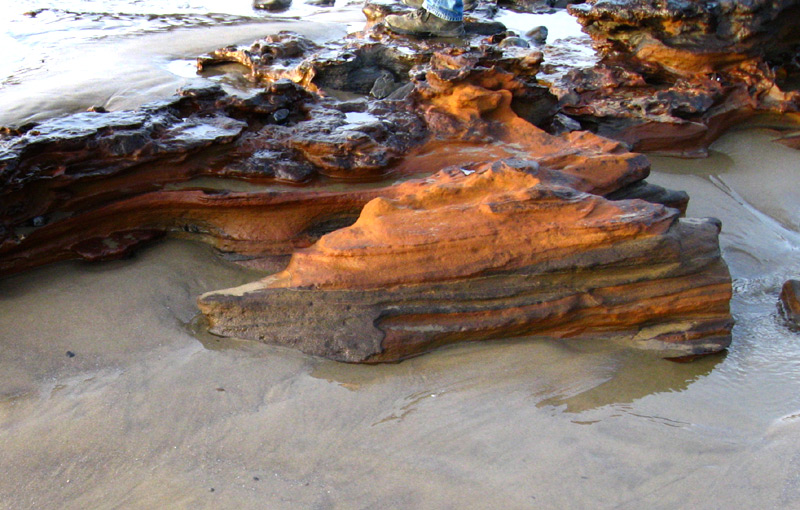
(Seaside, Oregon) - As winter presses on and storms continue to pound the shoreline, the chances increase of spotting strange, even baffling objects emerging from sand scoured by wave action. It’s not a sure thing – it doesn't happen every year. But the constant battering of king tides coupled with storm surges recently are going to take their toll and their chunks out of Oregon coast. (Red tower at Hug Point / Oregon Coast Beach Connection)
Includes exclusive listings; some specials in winter
In Cannon Beach:
Includes rentals not listed anywhere else
In Manzanita, Wheeler, Rockaway Beach:
Some specials for winter
In Pacific City, Oceanside:
Some specials for winter
In Lincoln City:
Some specials for winter
In Depoe Bay, Gleneden Beach:
Some specials for winter
In Newport:
Look for some specials
In Waldport
Some specials for winter
In Yachats, Florence
Some specials for winter
Southern Oregon Coast Hotels / Lodgings
Reedsport to Brookings, places to stay; winter deals
When this onslaught is over, look for gravel beds rich with agates at places like Bandon, Coos Bay, Yachats, Lincoln City and more.
Ghost forests could well be popping up: like those at Coos Bay's Sunset Beach, or the really ones (4,000 years-old) at Pacific City, Newport, south of Cannon Beach, or the super ancient ones at 80,000 years old at Netarts. In Search of More Oregon Coast Ghost Forests - Where to Find Ghost Forests
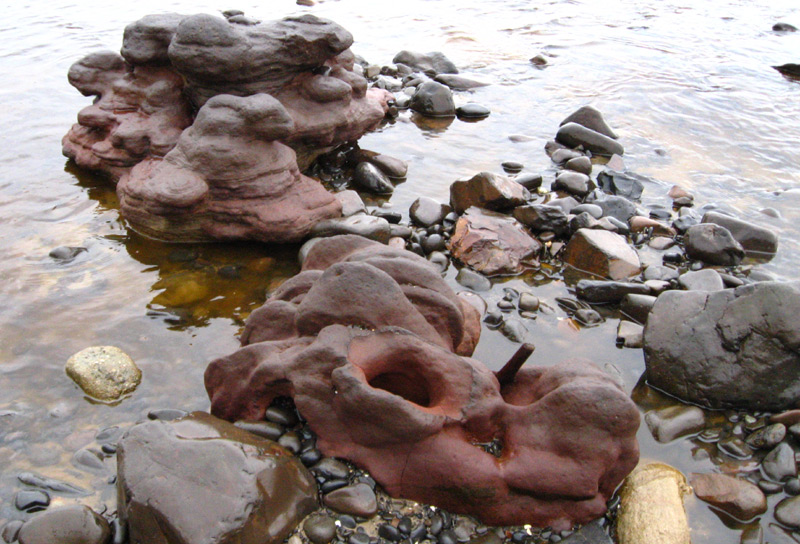
Among the more peculiar phenomena to watch for are the “red towers,” surreal, stump-like formations that typically show up only on the north coast - if they appear at all. These oddities resemble a mashup of a 1970s Yes album cover and a Dr. Seuss illustration, with twisted, puzzling shapes in varying shades of red.
Some have been spotted on occasion down in Newport and elsewhere. For some reason, they seem to occur more often at Arch Cape and Hug Point just south of Cannon Beach, however.
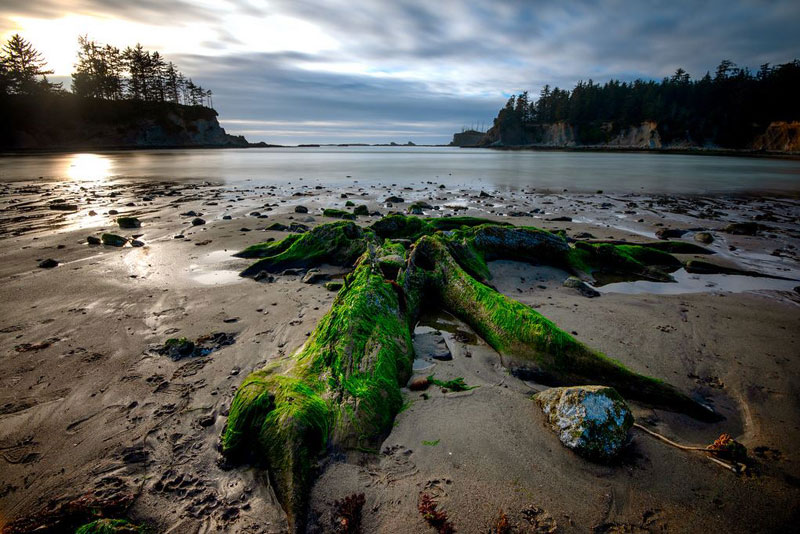
1200-year-old ghost forest Coos Bay - Photo Manuela Durson - Manuela Durson Fine Arts
They stand just a couple feet tall, but they make a big impression.
Seaside geologist Tom Horning explains that the “red towers” are essentially beach sand bonded by red iron oxide, formed beneath layers of sand.
There, protected from wave action and debris, these fragile, sandstone-like structures remain intact.
“Minerals cement the sands together to form reinforced, irregular bodies within and under the beach, which are then exposed to the casual observer when the beach is washed away,” Horning said. “Not uncommonly, the tops of the towers are exposed first, and rocks will wear these away, creating little pot-hole craters that make attractive landforms for photographers.”
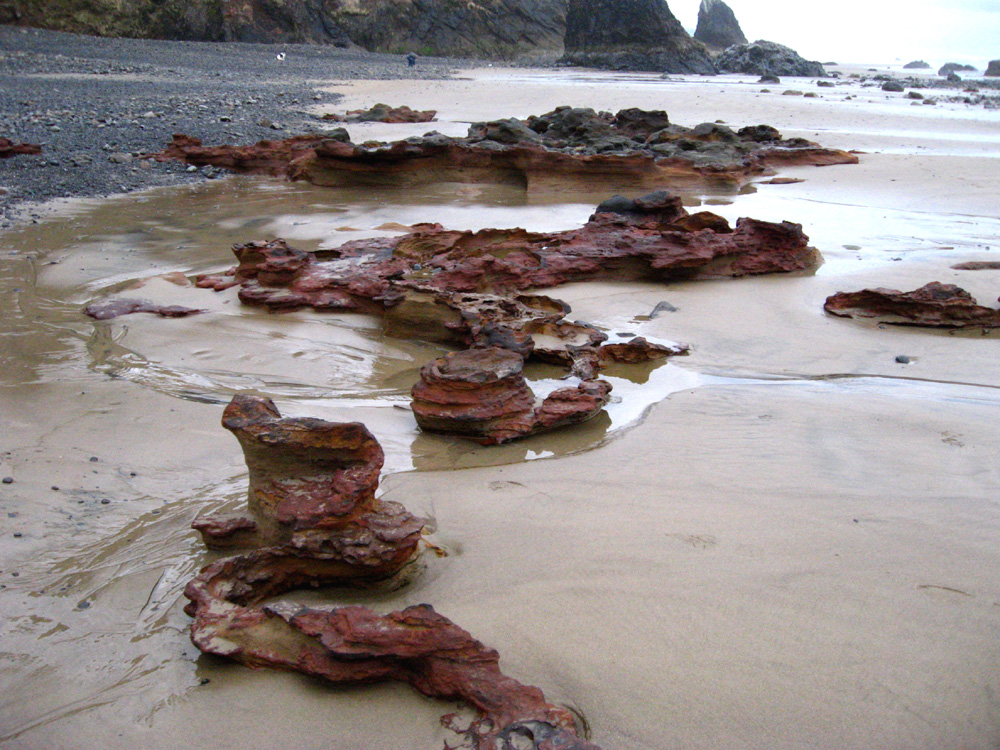
At Hug Point, mushroom-shaped rocks have also surfaced in the past, their full forms revealed by low sand levels.
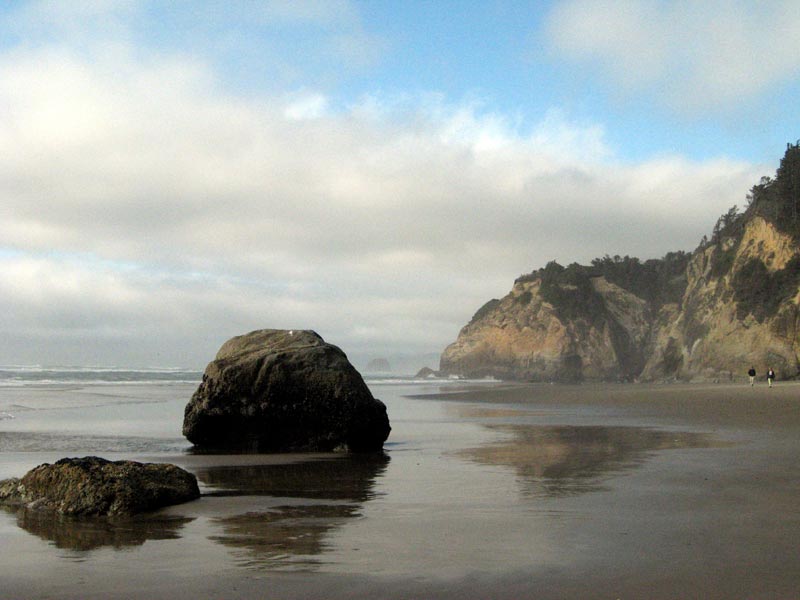
“These knobs of sandstone bedrock are being eroded by cobbles and pebbles on the sea floor that are swished and thrown against the bedrock during periods of strong storms,” Horning said. “Similar ledges are present under the cliffs at Hug Point, formed by the same erosional process.”
Some winters - though not all - have exposed strange discolorations in the inverted, terrace-like ledges beneath the cliffs. Horning attributes the hues to the fact that these areas are almost never exposed to air.
According to Horning, Hug Point's beach has been eroding for roughly 4,000 years. In that time, the cliffs have retreated only about 40 to 50 feet. The underlying cliff and bedrock were formed millions of years ago, later buried by debris and re-emerging through erosion around 4,000 years back.
Such erosion likely prompted local native tribes to relocate periodically, as the ocean consumed coastal forests and villages, pushing communities eastward across the coastal plain toward the mountain front that now defines the modern shoreline.
They know this to be the case around Newport. 5,000 years ago - according to Oregon geologist Roger Hart (now deceased) - Yaquina Head was a giant sand dune from which tribes would fish. That eroded away.
Interestingly, while erosion and rising sea levels may be sweeping parts of the Oregon coast away, the north coast appears to be slowly lifting.
IMPORTANT NOTE: The key here is safety. Do NOT head to this beach under storm conditions, like in this video
“If all this is accurate, the north coast is rising independently of sea level by about one foot every thousand years,” Horning said. “It appears that the coast drops from one to six feet with each earthquake, but the land still rises slowly in the meantime. After the Great Alaska Earthquake in 1964, for example, the land at Kenai had dropped about six feet. It has since all been restored by uplift in only 40 years. Presumably these rates vary through time, and the same will probably happen along the coast of Oregon, after the next Big One hits - whenever that will be.”
Whatever the greater processes exist, all this will be fun to look for on the beaches once the storms have stopped.
Oregon Coast Hotels for this event - South Coast Hotels - Oregon Coast Vacation Rentals - Where to eat - Maps - Virtual Tours
















Oregon Coast Vacation Rentals
Oregon Coast Lodging Specials


OREGON COAST HOTEL REVIEWS (hit refresh to see different reviews)
Music Reviews: Top Ten Innovative Holiday Tunes You Did Not Know
Jethro Tull, The Residents, Patty Gurdy, The Pogues, Robert Fripp, Roxy Music, Blue Nile, Emerson, Lake 'n Palmer, Chris Squire
Kiwanda Coastal Properties - Pacific City Hotel Reviews
Rates rock bottom now, but for an extra 10 perc use code 'BEACHCONNECT'. Click to see
Seaside Hotels, Oregon Coast
Seaside Hotel reviews, vacation rentals
What's Old is New Again on Oregon Coast: Inn of the Four Winds Reopens As New...
Some of the biggest ocean views in Seaside, historical charm. Seaside hotel reviews, Cannon Beach hotel review
More About Oregon Coast hotels, lodging.....
More About Oregon Coast Restaurants, Dining.....


Washington Coast / Oregon Coast Articles (stories are random: hit reload to see different articles)
Oregon Coast's Honeyman Park to Get Major Tree Removal Project, Brief Closure19 Aug 2026 at 9:17am
A few days' closure in ?27 as 150 dead trees removed. Florence, traffic
Shifting Oregon Coast Weather Makes Tillamook Head Rescue More Dangerous, Unpredictable
24 Aug 2026 at 6:49am
Four and a half hours of hiking, weather-restricted helicopter, boat. US Coast Guard. Seaside, Cannon Beach, Ecola State Park. Indian Beach
Major discovery on Saturn - as probes close in on Mercury
7 Sep 2026 at 11:59pm
Hubble spots a decagon and BepiColombo gets ready to separate into two floating around Mercury. Astronomy, sciences
Whimsical Oregon Coast Art Showing Sets Up at Florence Chamber
16 Aug 2026 at 10:09am
Arts Alliance has opened its August exhibit, Summer Fun, at the Visitor Center Art Gallery. Florence events
Three Quakes Close Together Off South Oregon Coast Sunday Night
7 Sep 2026 at 11:59pm
A 5.3 and 3.9 simultaneously, then a 2.6. Sciences, geology. Bandon, Coos Bay, Dunes City
Beach Advisories Lifted in Three Oregon Coast Accesses: Lincoln City, Brookings, Oceanside
5 Sep 2026 at 9:30pm
Lincoln City's Siletz Bay, Mill Beach in Curry County. Oceanside. Safety
Police Seek Tips on Who Decapitated a Shark Found on Washington Coast
17 Sep 2026 at 7:06pm
These sharks are on the brink of endangered status. Ocean Shores. Marine sciences
Ocean's Edge Wayside or Oregon Coast Access #27: Rockaway Beach's Center Has Many Faces
2 Oct 2026 at 7:55am
The main access goes by various names but really it's just Rockaway Beach
Back to Oregon Coast
Contact Advertise on Oregon Coast Beach Connection
All Content, unless otherwise attributed, copyright © Oregon Coast Beach Connection. Unauthorized use or publication is not permitted


Oregon
Coast Hotels
S. Coast Hotels
Astoria/Warrenton Hotels
Seaside Hotels
Cannon
Beach Hotels
Nehalem Bay Lodgings
Manzanita Hotels, Lodging
Rockaway Beach Hotels
Three Capes Lodging
Pacific City Hotels, Lodging
Lincoln
City Lodging
Depoe
Bay Hotels
Newport Hotels
Waldport Lodging
Yachats
Hotels
Florence Hotels
Reedsport Hotels
Coos Bay Hotels
Bandon Hotels
Port Orford Hotels
Gold Beach Hotels
Brookings Hotels
Oregon
Coast Vacation Rentals
Oregon
Coast Lodging Specials
South Coast Hotels
Dining
Guide
Seaside
Cannon
Beach Dining
Manzanita,
Rockaway, Wheeler Dining
Pacific
City, Oceanside, Netarts, Tierra Del Mar Restaurants
Tillamook
Bay Restaurants, Dining
Lincoln
City Dining, Restaurants
Depoe
Bay Restaurants, Dining
Newport Restaurants, Dining
Waldport,
Yachats Restaurants, Dining
Florence Restaurants, Dining
Restaurant
Reviews
Coast
Events Calendar
Astoria
Seaside,
Cannon Beach Calendar
Manzanita,
Rockaway Events
Tillamook,
Pacific City Calendar
Lincoln
City Events Calendar
Newport,
Depoe Bay Events Calendar
Yachats Events Calendar
Oregon Coast Complete Guides every beach access, attraction
Search for Oregon Coast Subjects, Articles
Explore Every Beach Spot


News Headlines from All Over Oregon Need to scan Oregon headlines? Constantly updated news from all over Oregon: a comprehensive, up-to-the-minute display of news headlines from a variety of media
Oregon Coast Oceanfront Lodging, Hotels, Rentals