



Aurora Chances in Washington Shift to Thursday - Friday, Slight Chance N. Edges of Oregon
Update 03/18/26 at 5:55 p.m.
By Oregon Coast Beach Connection Staff
(Seattle, Washington) – UPDATES: Major shifts in predictions - now to Thursday, maybe Friday night as well.
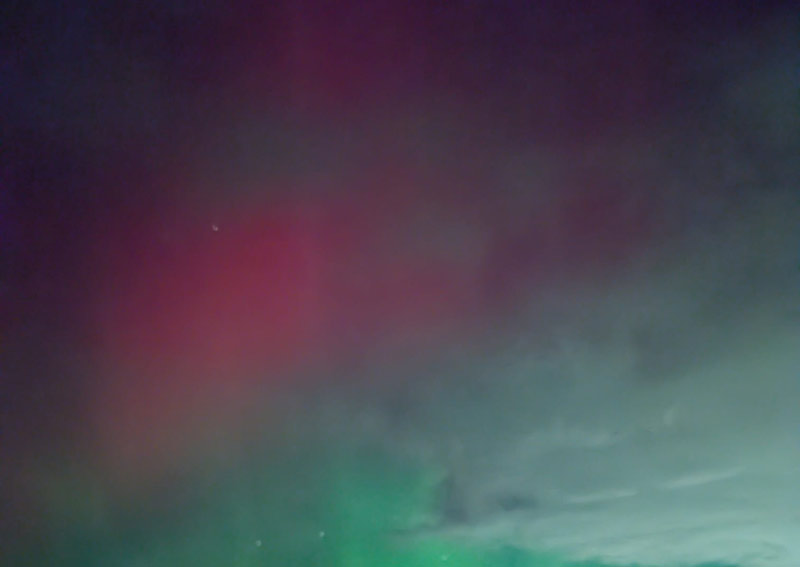
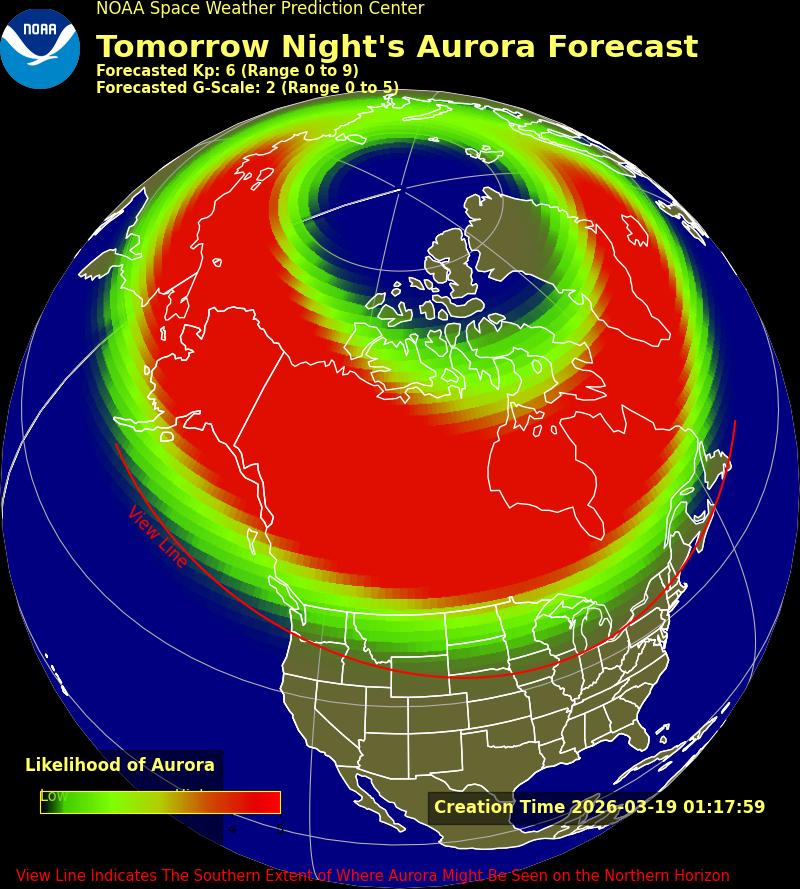
Most of Washington may see a brief aurora display late Thursday night and into the early hours of Friday (and possibly again late that night), as a coronal mass ejection heads toward Earth, according to the Space Weather Prediction Center (SWPC). It's entirely possible that it can be seen in Oregon or its coast - or at least parts of southern Washington – with the red view line dipping into Oregon just slightly (see the SWPC graphic). For those on the extreme tip of the Washington coast it could well be a free show. Above: Seattle aurora borealis by Suberry.
Includes exclusive listings; some specials in winter
In Cannon Beach:
Includes rentals not listed anywhere else
In Manzanita, Wheeler, Rockaway Beach:
Some specials for winter
In Pacific City, Oceanside:
Some specials for winter
In Lincoln City:
Some specials for winter
In Depoe Bay, Gleneden Beach:
Some specials for winter
In Newport:
Look for some specials
In Waldport
Some specials for winter
In Yachats, Florence
Some specials for winter
Southern Oregon Coast Hotels / Lodgings
Reedsport to Brookings, places to stay; winter deals
The agency said G2 moderate geomagnetic storming is likely now through Friday, with the arrival of a CME that left the Sun on March 15.
“Aurora may be seen as low as New York to Wisconsin to Washington state,” the SWPC said.
However, predictions for any aurora drastically shifted this morning from tonight to Thursday and possibly Friday.
Arrival times:
The G2 periods in the forecast stand out as the strongest windows for aurora activity, and converting them from UTC to Pacific Time shows when they could actually occur here on the West Coast.
G2 conditions (Kp 6 or higher) appear in three blocks, not including tonight. However, the SWPC does not show Washington within the viewline tonight.
Tomorrow night, it does:
• Mar 20, 03–06 UTC → Mar 19, 8–11 p.m. PDT
• Mar 21, 03–06 UTC → Mar 20, 8–11 p.m. PDT
• Mar 21, 06–09 UTC → Mar 20, 11 p.m.–2 a.m. PDT
In practical terms for the Northwest, the strongest storming begins early Thursday in Pacific Time and continues through late evening Friday (Mar 20) into the early hours of Saturday. These G2 intervals are the periods most likely to push auroras farther south, potentially into northern Oregon if skies cooperate.
Coronagraph imagery that arrived on March 15 showed a clear CME following an M2.7 solar flare near the solar region known as AR 4392. Forecasters say the disturbance could trigger noticeable effects at higher latitudes.
Exactly how far south into Washington it could be seen is as yet unclear, but the SWPC noted most of the action will north of the 55th parallel - well north of the Evergreen state.
Updated as of 3/18, 6 pm
You'll have to keep your eye on www.swpc.noaa.gov, but predictions for Wednesday night show a sight line dipping into Oregon.
This is definitely the downward side of the peak cycle for solar flares (the kinds that triggered all that hub-bub in the last two years). But the SWPC said these sizable event can happen, and it's not unusual for folks to get shots of it from the Oregon coast outside of the major cycle that runs every 11 years.
To catch it, you'll need a camera and tripod, and gear that can take long exposures. You won't see it with your naked eyes.
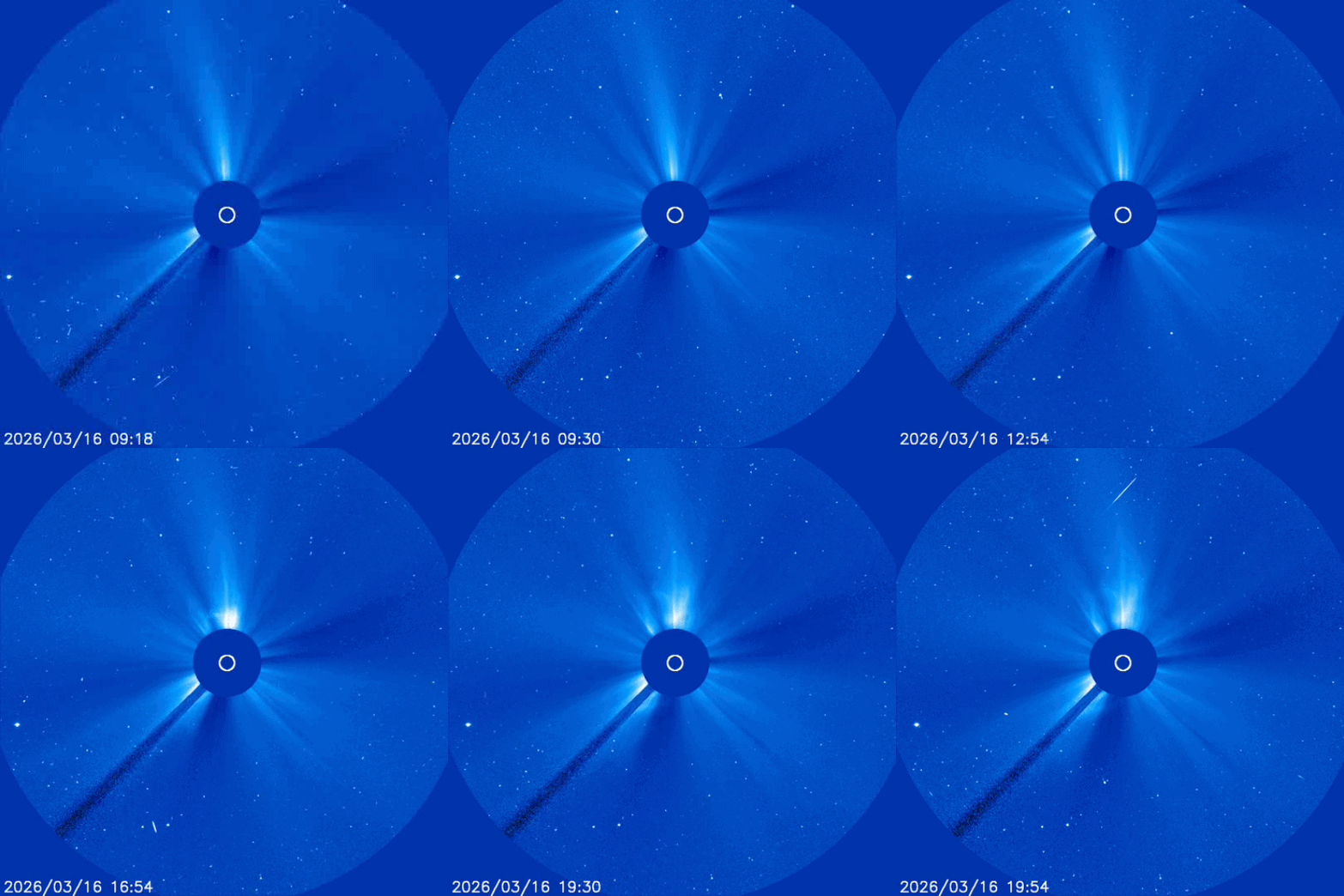
Satellite footage of this week's CME, which pointed straight to Earth
Potential impacts include power grid fluctuations in high-latitude systems, where voltage alarms may occur. Satellite operators could see irregularities in spacecraft orientation and increased drag on low Earth-orbit satellites. HF radio users at higher latitudes may experience fading or degraded propagation during periods of stronger geomagnetic activity.
Auroras are the shimmering lights that appear in Earth's high-altitude skies, created when energetic particles from space collide with the upper atmosphere. According to the SWPC, aurora is the name given to the glow produced when electrons stream down Earth’s magnetic field lines and strike atoms and molecules in the atmosphere, forming a ring or oval around the planet’s magnetic poles. The process is similar to how electrons passing through gas in a neon tube collide with different gases to produce distinct colors.
See Washington Coast Weather - See Oregon Coast Weather -- See weather for Portland, Pendleton, northern Oregon.
These displays form when the solar wind - charged particles constantly flowing outward from the Sun - interacts with Earth’s magnetosphere. When that stream intensifies, as during a solar flare or coronal mass ejection, more particles are funneled toward the poles, increasing the likelihood and brightness of auroras.
Oregon Coast Hotels for this event - South Coast Hotels - Oregon Coast Vacation Rentals - Where to eat - Maps - Virtual Tours
















OREGON COAST HOTEL REVIEWS (hit refresh to see different reviews)
A Bit of Oregon Coastal Swank At Not Quite the Coin
Lincoln City's Inn at Wecoma is a bit of a surprise. Lincoln City hotel reviews
Two Vacation Home Openings This Time of Year on Oregon Coast? Yes, Even in Pa...
Rare openings this week, later in August and some booking tips. Pacific City hotel reviews, vacation rentals
Manzanita Hotel Review: Oregon Coast Inn Gets New Life as Forest Getaway, New...
Nehalem River Inn is nearly 100 years old. Nehalem Hotel Review
A1 Beach Rentals - in Lincoln City
Lincoln City Hotel Reviews: Substantial rate reduction all rentals ( up to 50 percent) - click on site.
More About Oregon Coast hotels, lodging.....
More About Oregon Coast Restaurants, Dining.....
 |
 |
 |
Washington Coast / Oregon Coast Articles (stories are random: hit reload to see different articles)
Oregon Coast's Honeyman Park to Get Major Tree Removal Project, Brief Closure19 Aug 2026 at 9:17am
A few days' closure in ?27 as 150 dead trees removed. Florence, traffic
Coos County Sheriffs Remove Derelict Vessel from South Oregon Coast Bay
13 Sep 2026 at 8:29pm
The vessel was first discovered on September 5, partially submerged
US Coast Guard Video: Kiteboarders Need Rescue on Washington Coast
16 Aug 2026 at 10:05am
The pair had been swept out to sea. Long Beach, Westport, Grays Harbor
Tix Now for Sale for South Oregon Coast's Holiday Lights at Shore Acres
10 Aug 2026 at 11:09pm
Tickets available for visits from Nov. 26 through Dec. 31. Coos Bay events
Shifting Oregon Coast Weather Makes Tillamook Head Rescue More Dangerous, Unpredictable
24 Aug 2026 at 6:49am
Four and a half hours of hiking, weather-restricted helicopter, boat. US Coast Guard. Seaside, Cannon Beach, Ecola State Park. Indian Beach
The Cutest Little Baby Birds That Sometimes Fall from Their Oregon Coast Nests
24 Aug 2026 at 6:56am
Baby murres can tumble from their perches this time of year. Science, Seaside, Haystack Rock
Active Winds Along Oregon Coast, Cascades and Valleys: Touch of a Fall Storm
25 Sep 2026 at 9:22pm
UPDATES: High Wind Advisories in Valley, Gorge. Gale watch along the coast, brief thunderstorms in NW Oregon possible. Weather
Start Looking Now for the False Dawn / Zodiacal Light Above Oregon, Washington
13 Sep 2026 at 8:39pm
Starting maybe two hours before dawn, the mysterious light likely from Mars. Astronomy, sciences, weather
Back to Oregon Coast
Contact Advertise on Oregon Coast Beach Connection
All Content, unless otherwise attributed, copyright © Oregon Coast Beach Connection. Unauthorized use or publication is not permitted


Oregon
Coast Hotels
S. Coast Hotels
Astoria/Warrenton Hotels
Seaside Hotels
Cannon
Beach Hotels
Nehalem Bay Lodgings
Manzanita Hotels, Lodging
Rockaway Beach Hotels
Three Capes Lodging
Pacific City Hotels, Lodging
Lincoln
City Lodging
Depoe
Bay Hotels
Newport Hotels
Waldport Lodging
Yachats
Hotels
Florence Hotels
Reedsport Hotels
Coos Bay Hotels
Bandon Hotels
Port Orford Hotels
Gold Beach Hotels
Brookings Hotels
Oregon
Coast Vacation Rentals
Oregon
Coast Lodging Specials
South Coast Hotels
Dining
Guide
Seaside
Cannon
Beach Dining
Manzanita,
Rockaway, Wheeler Dining
Pacific
City, Oceanside, Netarts, Tierra Del Mar Restaurants
Tillamook
Bay Restaurants, Dining
Lincoln
City Dining, Restaurants
Depoe
Bay Restaurants, Dining
Newport Restaurants, Dining
Waldport,
Yachats Restaurants, Dining
Florence Restaurants, Dining
Restaurant
Reviews
Coast
Events Calendar
Astoria
Seaside,
Cannon Beach Calendar
Manzanita,
Rockaway Events
Tillamook,
Pacific City Calendar
Lincoln
City Events Calendar
Newport,
Depoe Bay Events Calendar
Yachats Events Calendar
Oregon Coast Complete Guides every beach access, attraction
Search for Oregon Coast Subjects, Articles
Explore Every Beach Spot


News Headlines from All Over Oregon Need to scan Oregon headlines? Constantly updated news from all over Oregon: a comprehensive, up-to-the-minute display of news headlines from a variety of media
Oregon Coast Oceanfront Lodging, Hotels, Rentals