




Finalized Report on Euthanized Oregon Coast Whale in Nov: Many Diseases
Published 04/06/26 at 5:55 p.m.
By Oregon Coast Beach Connection Staff
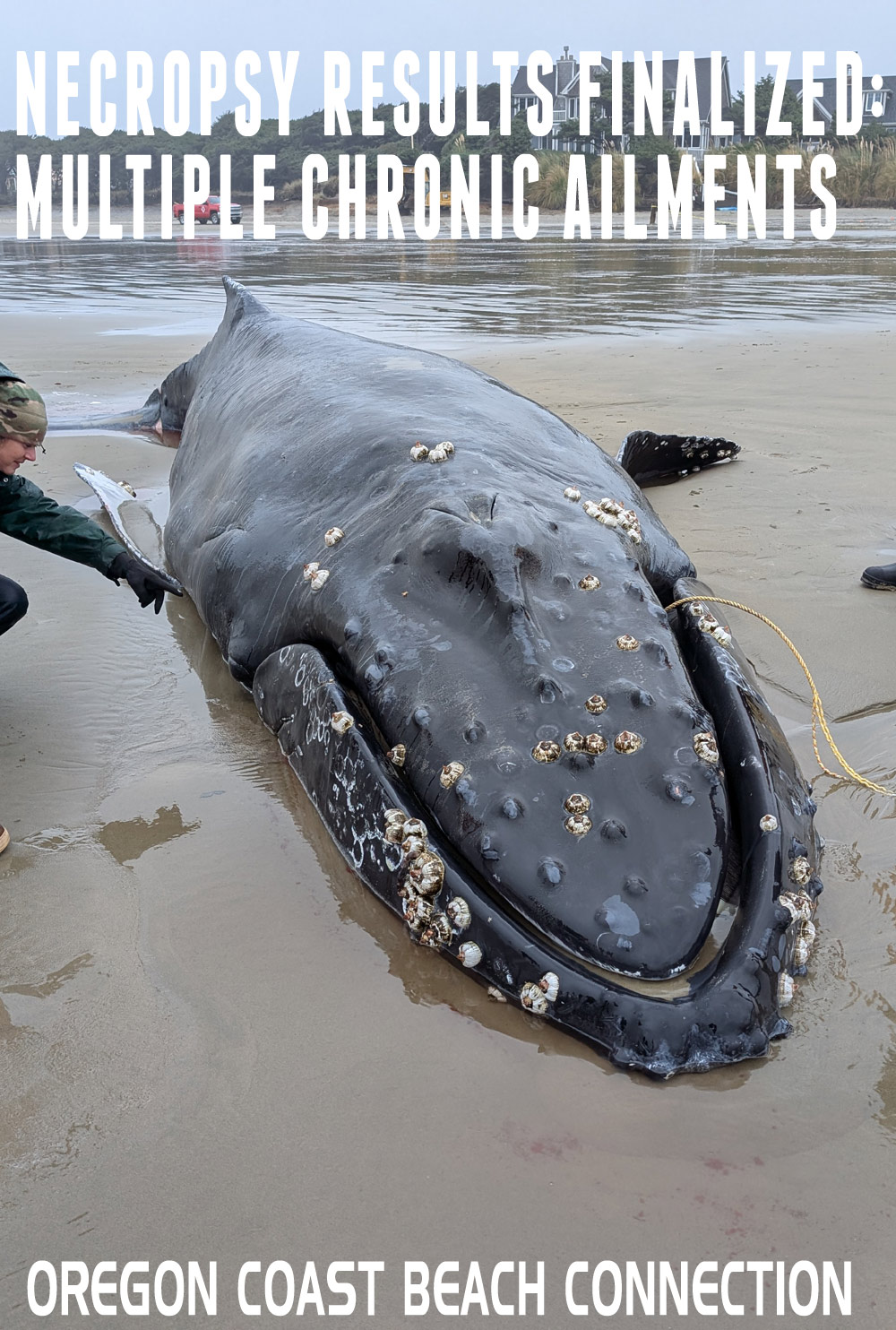
(Newport, Oregon) – A range of scientists around the world worked on a problem that originated on the Oregon coast in November, a stranded whale incident that became an incredibly heated argument among members of the public. (Photos OSU)
Includes exclusive listings; some specials in winter
In Cannon Beach:
Includes rentals not listed anywhere else
In Manzanita, Wheeler, Rockaway Beach:
Some specials for winter
In Pacific City, Oceanside:
Some specials for winter
In Lincoln City:
Some specials for winter
In Depoe Bay, Gleneden Beach:
Some specials for winter
In Newport:
Look for some specials
In Waldport
Some specials for winter
In Yachats, Florence
Some specials for winter
Southern Oregon Coast Hotels / Lodgings
Reedsport to Brookings, places to stay; winter deals
Now, the hot-button issue should be settled for many, as the final necropsy report for the young humpback whale that stranded near Yachats in November concludes that multiple chronic diseases played a major role in the animal’s decline and eventual beaching. Oregon State University’s Oregon Veterinary Diagnostic Laboratory just released the results.
After consulting with marine mammal pathologists and scientists around the world, lead pathologist Dr. Kurt Williams said the findings point to long-standing health problems that predated the whale’s entanglement and stranding.
“When I look at all the results in the context of what we know about the whale, there are many signs it was having problems long before the stranding,” said Williams, director of the laboratory at OSU’s Gary R. Carlson, MD, College of Veterinary Medicine. “My interpretation of events is that the animal’s pre-existing disease challenges contributed to the whale's entanglement and then to the live stranding.”
The male humpback, estimated to be 1 to 2 years old, was found to have significant chronic disease across multiple organ systems. The report cites evidence of spinal cord disease likely caused by infection, as well as severe, widespread inflammatory disease in the intestine and colon, likely linked to intestinal parasites.

The whale’s stomach and intestines were empty, indicating it had not eaten for weeks. Its fat reserves were minimal, and the necropsy also documented signs of chronic congestive heart failure, along with acute heart failure associated with the stress of stranding. Responders attempting to assist the whale would not have been aware of these underlying conditions.
“Significant chronic disease processes in multiple organ systems likely contributed to the stranding independent of entanglement,” the report said. Latest on Oregon Coast Humpback Whale: Rescue Fails, Euthanized - Officials: stay away from this site in north Yachats
Williams said he hopes the case will help broaden scientific understanding of whale health. “We hope the findings from this case expand our understanding of whale diseases and spur future investigations to understand and improve the health of whales and the oceans around the globe,” the report noted.
Dr. Leigh Torres with the Hatfield Marine Science Center in Newport said the whale was not emaciated like the grays the Oregon and Washington coast has seen lately.
"We don’t know how much the entanglement played in the death," she told Oregon Coast Beach Connection. " It certainly didn’t help and likely impaired the whale in some way."
At the time of the incident, there was a small army that had gathered in the middle of the night at the remote beach on the central Oregon coast. A large group had endangered themselves by trying to push the creature back out to sea (which is also illegal under federal law). One last attempt was made by whale experts from Washington to use a complex pulley system and yank the juvenile back into the waters but it did not work.
As many scientists said then, the animal was too sick to survive much longer. Authorities opted to humanely euthanize the struggling whale.
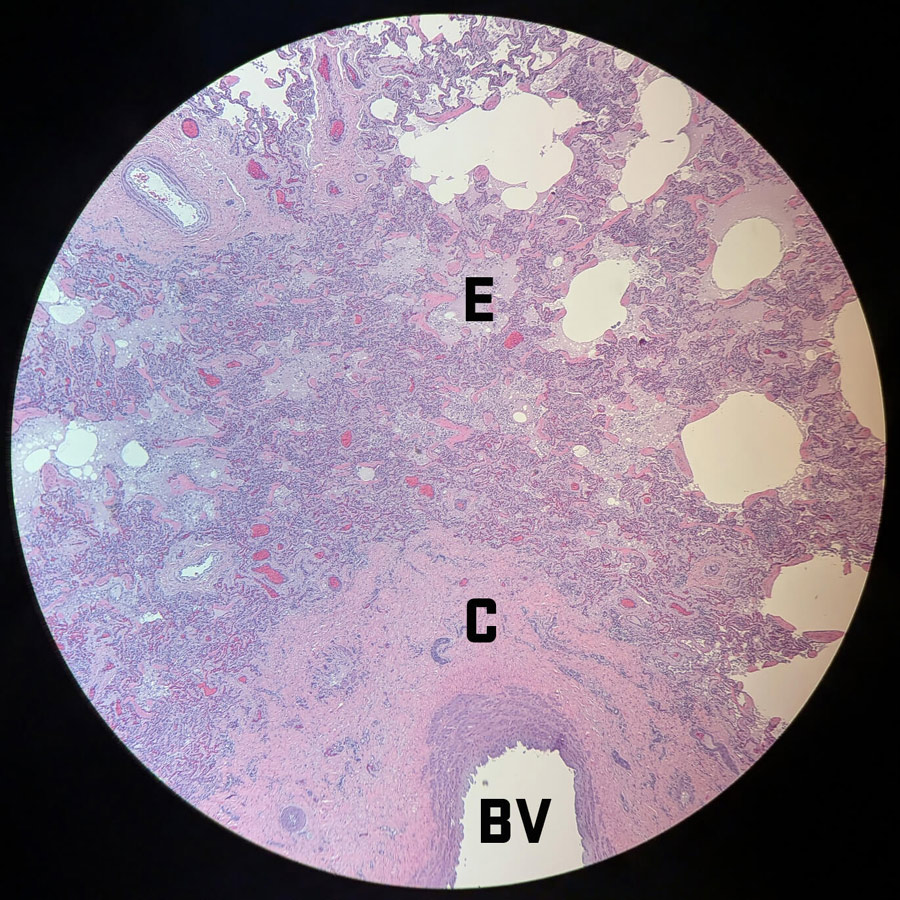
A microscopic image of tissue from the whale’s lung shows evidence of edema (E) where fluid has leaked out of small blood vessels from blood backing up in the lungs. Increased collagen (C) has formed around pulmonary blood vessels (BV). Photo by Jens Odegaard/Oregon State University.
The fact it had already stranded showed the whale was doomed.
"Typically large whales do not strand unless sick or injured in some way," Torres said.
The online arguments between those who supported the fishing industry, supporters of locals trying to free the whale and factions from out-of-state who were simply viewing from social media was intense. Much of the ire was pointed at scientists trying to assess the situation, and even resulted in releasing personal information online and some threats to media who wrote about the possibility of entanglement from fishing gear.
The Oregon Marine Mammal Stranding Network, coordinated by Oregon State University’s Marine Mammal Institute in Newport, responded to the incident with support from partner agencies. The program covers strandings along the central and southern Oregon coast as part of the West Coast Marine Mammal Stranding Network.
Currently happening: Washington Coast Dealing with Three Dead Gray Whales and How They Died
Oregon Coast Hotels - South Coast Hotels - Oregon Coast Vacation Rentals - Where to eat - Maps - Virtual Tours
















OREGON COAST HOTEL REVIEWS (hit refresh to see different reviews)
Lincoln City Hotel Sees Lively Upgrade to Its Already Dynamic Oregon Coast Vibes
Surfland Hotel turned into a glossy yet adventurous, innovative place. Lincoln City hotel reviews
Laidback Rockaway Beach, Ocean in View from Hidden Oregon Coast Condo Rental
Luxury and an unstoppable view meet. Rockaway Beach hotel reviews, lodging news
Astounding Oregon Coast Balcony Views at a Mere Two of Newport's Hotspots
20 Aug 2026 at 4:35am
A slice of infinity at one and a charming mansion in dense woods. Newport hotel reviews. Inn at Nye Beach, Ocean House BnB
Review: Inn At Wecoma, Lincoln City. Sandy Hayden recommends Inn At Wecoma
Lincoln City Hotel Review: The staff was great, very friendly, and welcoming. The room was great, and I was most thankful they accommodated the dogs. It was awesome how they even gave a doggie treat bag for both of our dogs.
More About Oregon Coast hotels, lodging.....
More About Oregon Coast Restaurants, Dining.....
 |
 |
 |
Washington Coast / Oregon Coast Articles (stories are random: hit reload to see different articles)
Partial Lunar Eclipse Tonight for Oregon, Washington, Coast: Interesting Colorations27 Aug 2026 at 10:11am
Oranges and maybe even something more colorful tonight. Astronomy, weather
Weather Roller Coaster: Oregon and Its Coast Get Rain, Thunder, Then Warms for Holiday Weekend
30 Aug 2026 at 9:59pm
Fire?plagued areas get a little help from brief rain and thunder before conditions warm for the holiday weekend
Waldport's Beach, Bike and Blues Fest Returns to Central Oregon Coast with New Venue
8 Sep 2026 at 8:58pm
Six hours of blues, Saturday, September 12, marking its fifth year. Waldport events
Oregon State Police: Man Slips Off Ledge and Dies at Silver Falls State Park Attempting Photos
11 Aug 2026 at 10:41pm
Kentucky man goes beyond fencing and apparently fell
Two Paragliders Fly Past N. Oregon Coast's Haystack Rock, Possible Federal Crimes
10 Aug 2026 at 10:28pm
Cannon Beach landmark a federal wildlife refuge. True crime, sciences, tufted puffins
Concert in the Wilds of Shore Acres: South Oregon Coast's 'In A Lanscape' Aug. 29
9 Aug 2026 at 11:01am
Outdoor classical music by Hunter Noack hits Coos Bay Saturday, August 29. Coos Bay events
Central Oregon Coast Scares: Florence's Haunted Maze Gearing Up for More Frights
13 Sep 2026 at 8:39pm
October 28-31 at the Florence Events Center, this time with accessibility in mind. Florence events
Neskowin Ghost Forest, 2,000 year old stumps - Lincoln City, Oregon Virtual Tour
11 Aug 2026 at 4:12am
Deeper into the unique 2,000 year old stumps - Lincoln City, Oregon Coast Virtual Tour, Inland 101, Neskowin, Corridor of Mystery
Back to Oregon Coast
Contact Advertise on Oregon Coast Beach Connection
All Content, unless otherwise attributed, copyright © Oregon Coast Beach Connection. Unauthorized use or publication is not permitted


Oregon
Coast Hotels
S. Coast Hotels
Astoria/Warrenton Hotels
Seaside Hotels
Cannon
Beach Hotels
Nehalem Bay Lodgings
Manzanita Hotels, Lodging
Rockaway Beach Hotels
Three Capes Lodging
Pacific City Hotels, Lodging
Lincoln
City Lodging
Depoe
Bay Hotels
Newport Hotels
Waldport Lodging
Yachats
Hotels
Florence Hotels
Reedsport Hotels
Coos Bay Hotels
Bandon Hotels
Port Orford Hotels
Gold Beach Hotels
Brookings Hotels
Oregon
Coast Vacation Rentals
Oregon
Coast Lodging Specials
South Coast Hotels
Dining
Guide
Seaside
Cannon
Beach Dining
Manzanita,
Rockaway, Wheeler Dining
Pacific
City, Oceanside, Netarts, Tierra Del Mar Restaurants
Tillamook
Bay Restaurants, Dining
Lincoln
City Dining, Restaurants
Depoe
Bay Restaurants, Dining
Newport Restaurants, Dining
Waldport,
Yachats Restaurants, Dining
Florence Restaurants, Dining
Restaurant
Reviews
Coast
Events Calendar
Astoria
Seaside,
Cannon Beach Calendar
Manzanita,
Rockaway Events
Tillamook,
Pacific City Calendar
Lincoln
City Events Calendar
Newport,
Depoe Bay Events Calendar
Yachats Events Calendar
Oregon Coast Complete Guides every beach access, attraction
Search for Oregon Coast Subjects, Articles
Explore Every Beach Spot





News Headlines from All Over Oregon Need to scan Oregon headlines? Constantly updated news from all over Oregon: a comprehensive, up-to-the-minute display of news headlines from a variety of media
Oregon Coast Oceanfront Lodging, Hotels, Rentals