




After Going Where No One Has Gone Before, Artemis Splashes Down Today: See Gallery
Published 04/10/26 at 6:55 a.m.
By Oregon Coast Beach Connection Staff
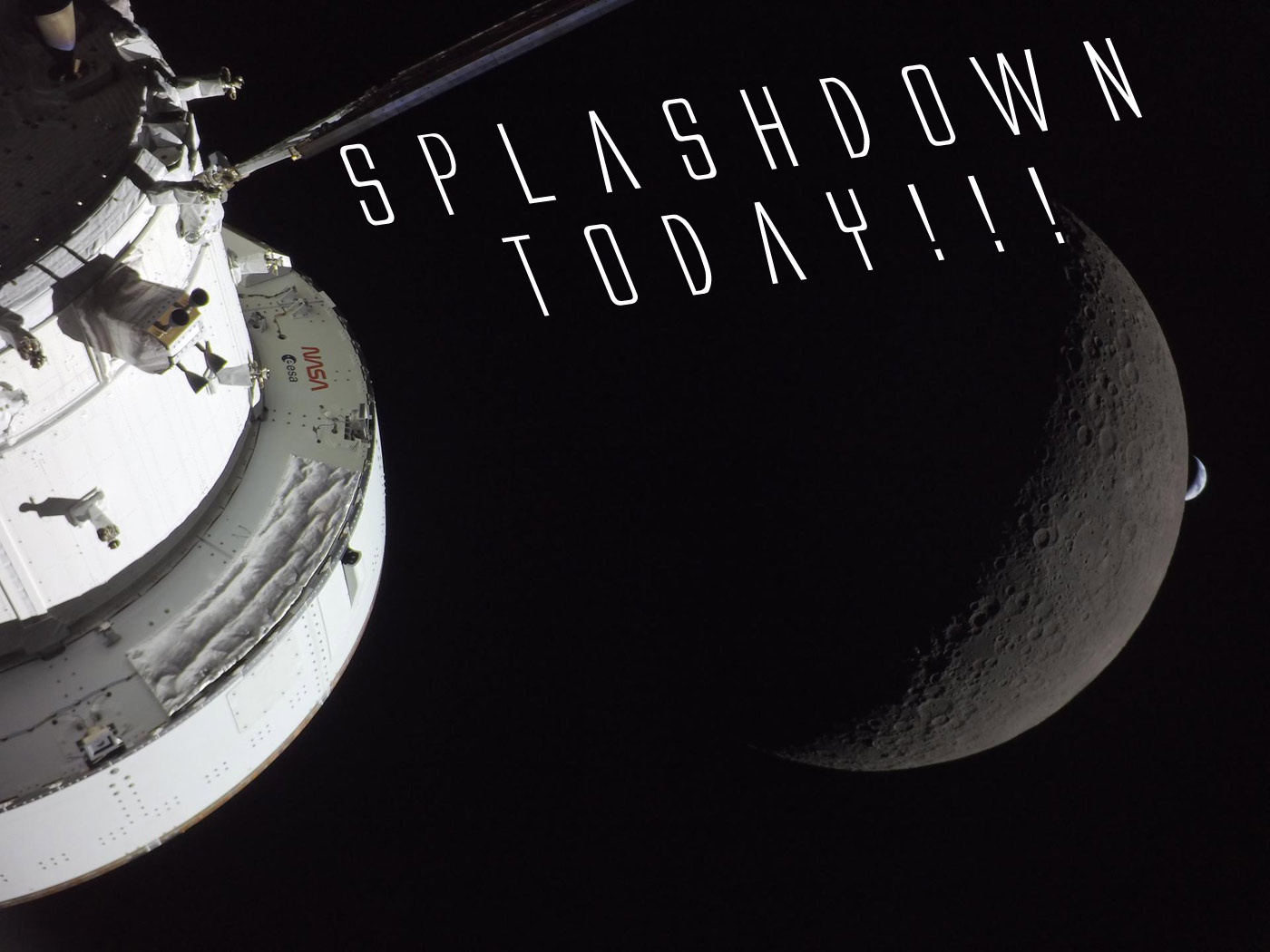
(Lincoln City, Oregon) – Several hundred miles from the Oregon coast (but along the same shoreline), world history will be made later today. Actually, it's more like multiple worlds' history. (Above: NASA’s Orion spacecraft captures the Moon and the Earth in one frame during the Artemis II crew’s deep space journey at 6:42 p.m. ET on the sixth day of the mission. The right side of NASA’s Orion spacecraft is seen lit up by the Sun. A waxing crescent Moon is visible behind it. And then, a crescent Earth, tiny compared to the Moon, is about to set below the Moon’s horizon on the right. Credit: NASA)
Includes exclusive listings; some specials in winter
In Cannon Beach:
Includes rentals not listed anywhere else
In Manzanita, Wheeler, Rockaway Beach:
Some specials for winter
In Pacific City, Oceanside:
Some specials for winter
In Lincoln City:
Some specials for winter
In Depoe Bay, Gleneden Beach:
Some specials for winter
In Newport:
Look for some specials
In Waldport
Some specials for winter
In Yachats, Florence
Some specials for winter
Southern Oregon Coast Hotels / Lodgings
Reedsport to Brookings, places to stay; winter deals
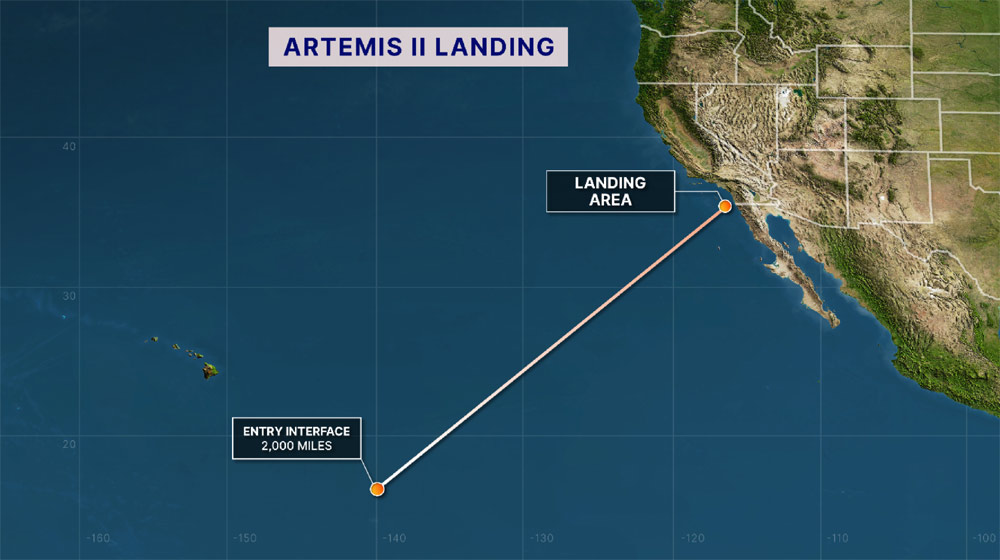
NASA teams and the four crewmen themselves are making final preparations for Orion’s return as Artemis II heads toward re-entry and splashdown, scheduled for about 8:07 p.m. (5:07 p.m. PDT) on Friday, April 10, off the coast of San Diego.
See the gallery of photos below
NASA astronauts Reid Wiseman, Victor Glover, and Christina Koch, along with CSA (Canadian Space Agency) astronaut Jeremy Hansen, became the first people to leave Earth's orbit since the Apollo program in 1972
A wide variety of activities are taking place aboard both Integrity and the service module itself.
NASA said re-entry operations begin when the service module separates at approximately 7:33 p.m. EDT, about 20 minutes before Orion reaches the upper atmosphere southeast of Hawaii. A final trajectory-adjustment burn at 7:37 p.m. will refine the flight path before the spacecraft performs a series of roll maneuvers to distance itself from departing hardware. Orion is expected to reach peak velocity - roughly 23,864 mph - just before entry interface.
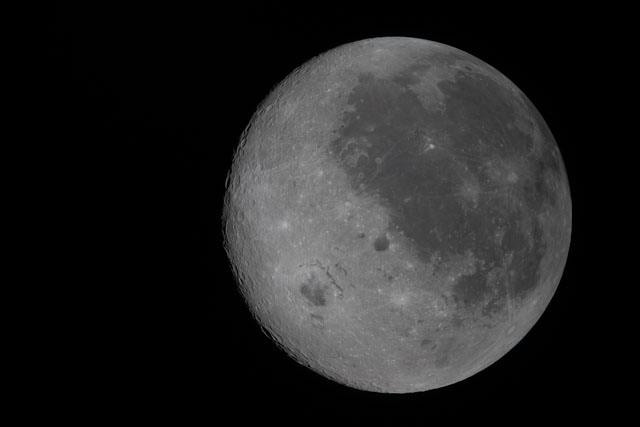
Part of the far side of the moon caught by Artemis II
As the capsule descends through roughly 400,000 feet, NASA said it will enter a planned six-minute communications blackout at 7:53 p.m. as plasma builds around the heat shield during peak heating. The crew is expected to experience up to 3.9 Gs under a nominal landing profile.
Once communications resume, Orion will jettison its forward bay cover and deploy its drogue parachutes near 22,000 feet at 8:03 p.m. The three main parachutes will follow at about 6,000 feet at 8:04 p.m., slowing the spacecraft for splashdown off the California coast near San Diego.
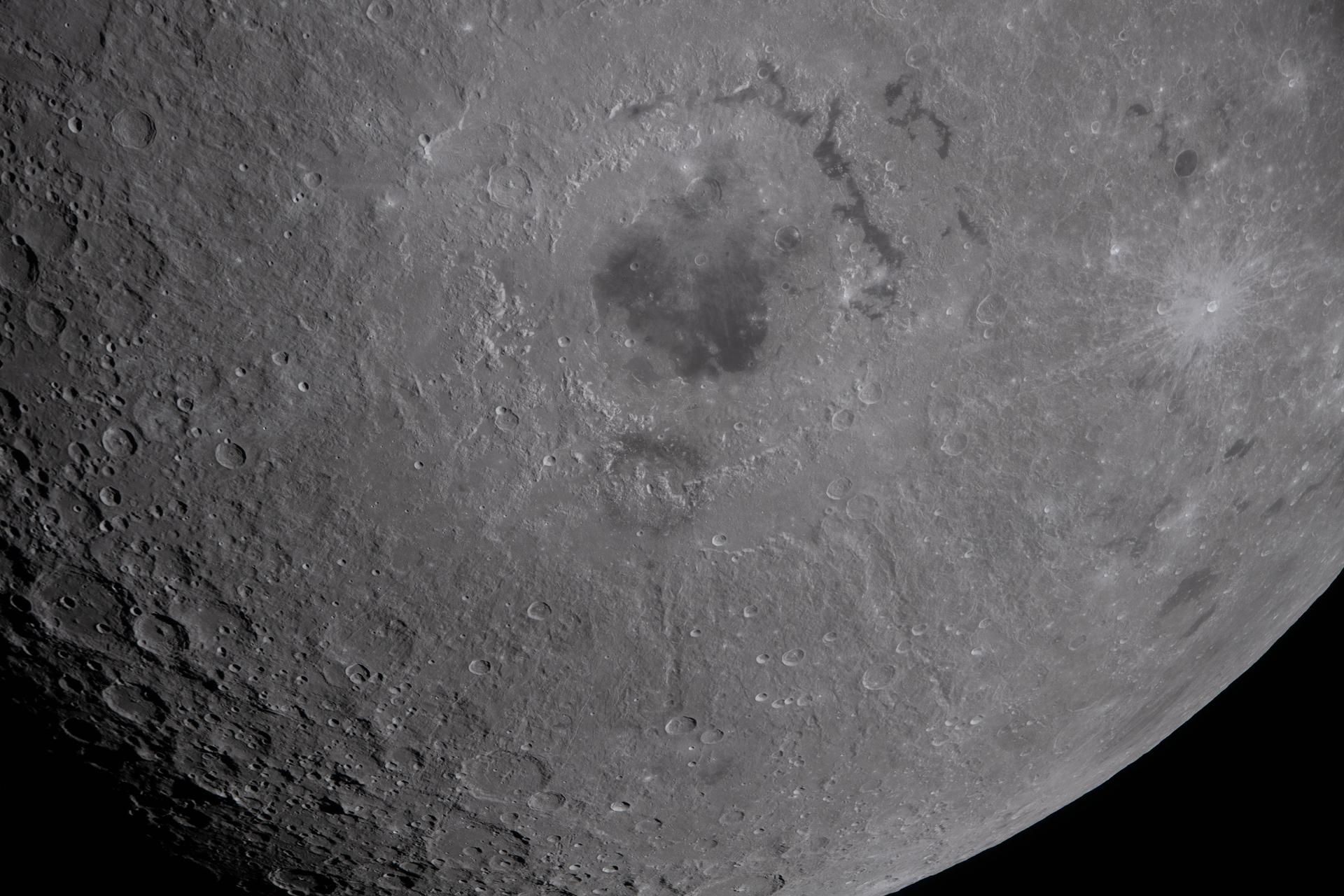
Above: The lower half of the Moon hangs suspended in time in this photograph from the Artemis II crew during the lunar flyby observation period. In the upper center of the photo, the Orientale basin is the prominent feature, with a black patch of ancient lava in the center that punched through the Moon’s crust in an eruption billions of years ago. Credit: NASA
There was a bit of a communications issue Thursday during one major planned maneuver.
Earlier in the day, Orion fired its thrusters for nine seconds, increasing velocity by 5.3 feet per second and pushing the crew past the halfway point of their return trip.
“About two hours before the burn, there was an unexpected return link loss of signal during a data rate change affecting the transmission of communications and telemetry from the spacecraft to the ground,” NASA said. “Two-way communications were reestablished, and flight controllers resumed preparing for the upcoming burn with the crew shortly after. “
NASA officials also held a mission status briefing Thursday, outlining re-entry and splashdown procedures. The third return-trajectory correction burn is scheduled for April 10 at approximately 1:53 p.m. ahead of final descent operations.
The mission's end heralds a host of new achievements, including traveling farther from Earth than anyone has before – even during the Apollo missions of 50 years ago. Artemis II captured numerous amazing images of the far side of the moon, and named some new crater discoveries.
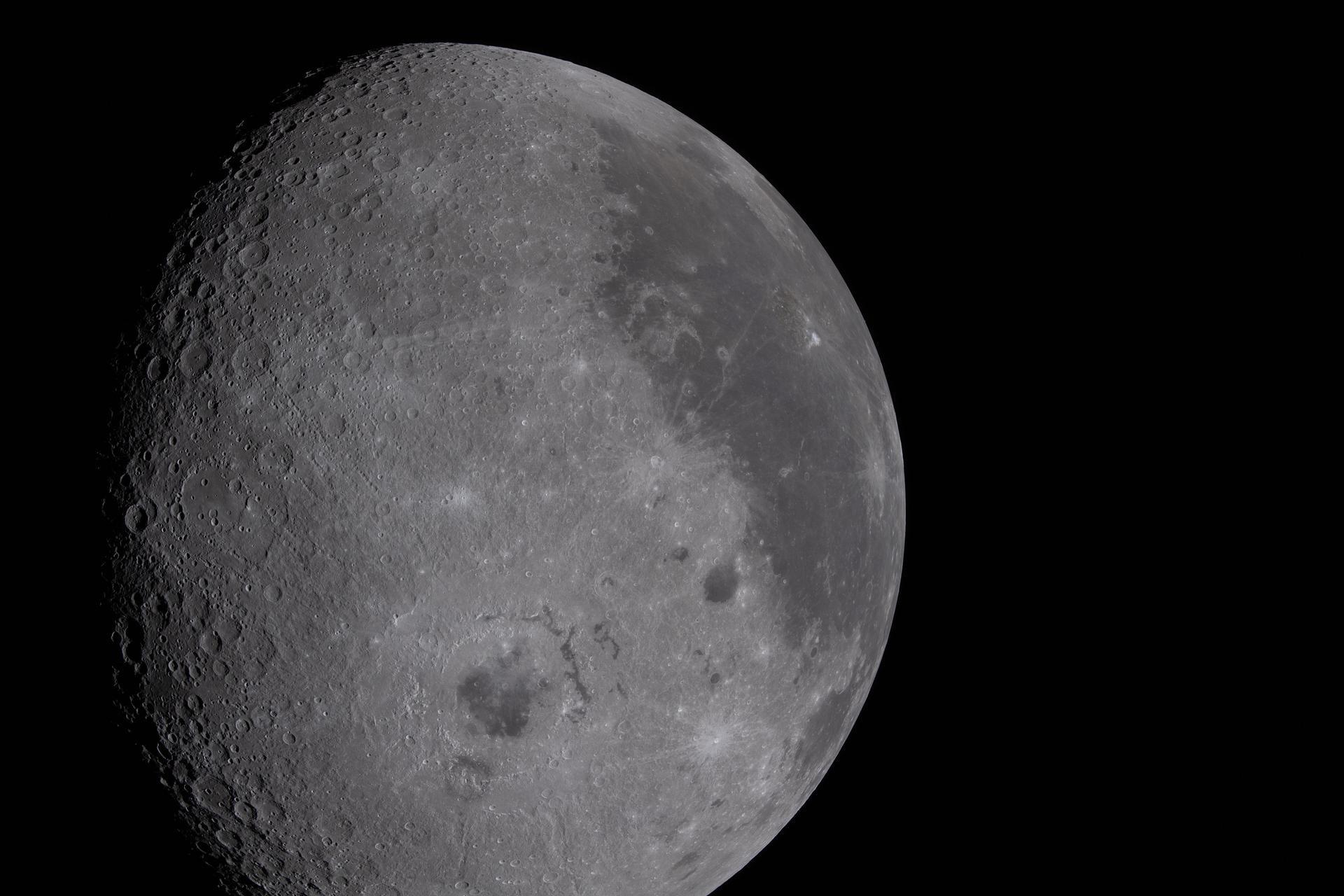
On the first shift during the lunar flyby observation period, the Artemis II crew captured more than two-thirds of the Moon showcasing the intricate features of the nearside. The 600-mile-wide impact crater, Orientale basin, lies along the transition between the near and far sides and is sometimes partly visible from Earth. The round black spot northeast of Orientale is Grimaldi crater, known for its exceptionally dark mare lava floor and heavily degraded rim. Credit: NASA
Oregon Coast Hotels in this area - South Coast Hotels - Oregon Coast Vacation Rentals - Where to eat - Maps - Virtual Tours























OREGON COAST HOTEL REVIEWS (hit refresh to see different reviews)
A True 'Pacific Treasure' on Oregon Coast, Rental Overlooks Lincoln City Calm...
A hot tub on that balcony, massive windows to the view. Keystone Vacation Rentals. Lincoln City Hotel reviews, Lincoln City lodging, vacation rentals
Secluded N. Oregon Coast Villa Overlooks Cannon Beach, Peaks
A massive vacation rental home near the Ecola State Park. Cannon Beach hotel reviews, Cannon Beach vacation rentals
A True 'Pacific Treasure' on Oregon Coast, Rental Overlooks Lincoln City Cal...
7 Sep 2026 at 11:21pm
Keystone Vacation Rentals reviews: Right by the largest set of tidepools in Lincoln City. Lincoln City hotel reviews
Coos Bay Hotels, South Oregon Coast
Coos Bay Hotel news, Coos Bay - North Bend - Charleston hotel reviews, vacation rentals
More About Oregon Coast hotels, lodging.....
More About Oregon Coast Restaurants, Dining.....
 |
 |
 |
Washington Coast / Oregon Coast Articles (stories are random: hit reload to see different articles)
Three Quakes Close Together Off South Oregon Coast Sunday Night7 Sep 2026 at 11:59pm
A 5.3 and 3.9 simultaneously, then a 2.6. Sciences, geology. Bandon, Coos Bay, Dunes City
Fire Restrictions Rescinded on Oregon Coast Federal Forestland - Inland State Parks Vary
21 Sep 2026 at 9:02pm
No more campfire restrictions on Siuslaw areas, state parks still in place inland. Florence, Yachats, Reedsport, Tillamook, Waldport, Pacific City, Roosevelt Beach, Lane County, Tillamook, Manzanita, Lincoln City
Pedestrian Projects Coming to Oregon Coast; I-5 Work This Week
13 Aug 2026 at 7:49pm
More safety at Lincoln Beach and Tillamook. Traffic, Gleneden Beach
Oregon / Washington / Coast Holiday Weekend Travel: AAA Says Higher Gas Prices, Busier
30 Aug 2026 at 3:25pm
Coast is extremely popular but bad news on gas. Traffic
Two Water Searches on Oregon Coast Have Happy Endings - But There's a Lesson
24 Aug 2026 at 11:07pm
Rescue attempts in Seaside that weren't needed after all. The Cove, weather
Oregon's Crave The Coast Returns in October, Month-Long Seafood Fest from Astoria to Neskowin
14 Sep 2026 at 8:52pm
All through Oct: Boat trips, cheese, ice cream, and major seafood. Garibaldi events, Astoria events, Seaside events, Warrenton events, Cannon Beach events, Manzanita events, Rockaway Beach events, Tillamook events, Pacific City events, Neskowin events
The Cutest Little Baby Birds That Sometimes Fall from Their Oregon Coast Nests
24 Aug 2026 at 6:56am
Baby murres can tumble from their perches this time of year. Science, Seaside, Haystack Rock
South Oregon Coast Mushroom Collection Permits Issued Soon at Reedsport
20 Aug 2026 at 9:35am
Among the coveted finds: matsutake mushrooms collected commercially. Reedsport events, science
Back to Oregon Coast
Contact Advertise on Oregon Coast Beach Connection
All Content, unless otherwise attributed, copyright © Oregon Coast Beach Connection. Unauthorized use or publication is not permitted


Oregon
Coast Hotels
S. Coast Hotels
Astoria/Warrenton Hotels
Seaside Hotels
Cannon
Beach Hotels
Nehalem Bay Lodgings
Manzanita Hotels, Lodging
Rockaway Beach Hotels
Three Capes Lodging
Pacific City Hotels, Lodging
Lincoln
City Lodging
Depoe
Bay Hotels
Newport Hotels
Waldport Lodging
Yachats
Hotels
Florence Hotels
Reedsport Hotels
Coos Bay Hotels
Bandon Hotels
Port Orford Hotels
Gold Beach Hotels
Brookings Hotels
Oregon
Coast Vacation Rentals
Oregon
Coast Lodging Specials
South Coast Hotels
Dining
Guide
Seaside
Cannon
Beach Dining
Manzanita,
Rockaway, Wheeler Dining
Pacific
City, Oceanside, Netarts, Tierra Del Mar Restaurants
Tillamook
Bay Restaurants, Dining
Lincoln
City Dining, Restaurants
Depoe
Bay Restaurants, Dining
Newport Restaurants, Dining
Waldport,
Yachats Restaurants, Dining
Florence Restaurants, Dining
Restaurant
Reviews
Coast
Events Calendar
Astoria
Seaside,
Cannon Beach Calendar
Manzanita,
Rockaway Events
Tillamook,
Pacific City Calendar
Lincoln
City Events Calendar
Newport,
Depoe Bay Events Calendar
Yachats Events Calendar
Oregon Coast Complete Guides every beach access, attraction
Search for Oregon Coast Subjects, Articles
Explore Every Beach Spot



News Headlines from All Over Oregon Need to scan Oregon headlines? Constantly updated news from all over Oregon: a comprehensive, up-to-the-minute display of news headlines from a variety of media
Oregon Coast Oceanfront Lodging, Hotels, Rentals