




When Oregon Coast Whales Spout Rainbows - Yes, It's a Thing
Published 03/22/26 at 6:55 a.m.
By Oregon Coast Beach Connection Staff
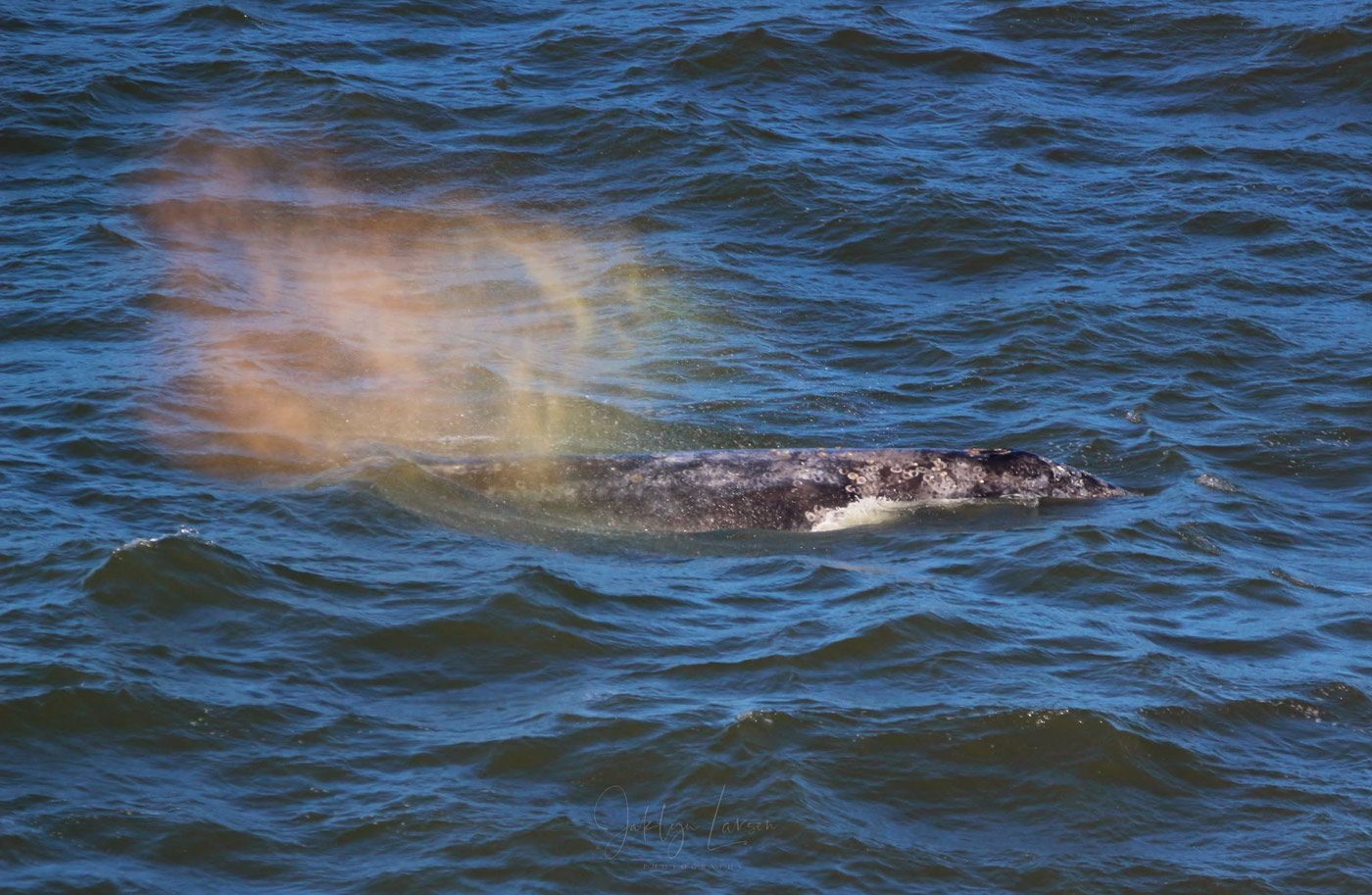
(Newport, Oregon) – There's something whales off the Oregon coast and Washington coast have in common with unicorns. Even the common gray whale. In fact, that's the one you're more likely to see in this way. (Photo Jaklyn Larsen Photography )
Includes exclusive listings; some specials in winter
In Cannon Beach:
Includes rentals not listed anywhere else
In Manzanita, Wheeler, Rockaway Beach:
Some specials for winter
In Pacific City, Oceanside:
Some specials for winter
In Lincoln City:
Some specials for winter
In Depoe Bay, Gleneden Beach:
Some specials for winter
In Newport:
Look for some specials
In Waldport
Some specials for winter
In Yachats, Florence
Some specials for winter
Southern Oregon Coast Hotels / Lodgings
Reedsport to Brookings, places to stay; winter deals
Whales can spout rainbows. Yes, unicorns actually either poop out rainbows or they shoot them out of their horns (yes, we kid). Whales, however, shoot them out of their blowholes.
Except that it's much more complex than that. And it's super rare to see or photograph. Yet it turns out photos of gray whales spouting rainbows along the Oregon coast do exist, though they're almost as hard to find as unicorns.
Leigh Torres is a whale research scientist, and a professor with the Hatfield Marine Science Center in Newport, OSU and the Marine Mammal Institute – among other titles. She provided this shot of a rainbow-exuding whale on the area's ocean, taken by the GEMM Lab, Marine Mammal Institute, Oregon State University.
She told Oregon Coast Beach Connection scientists call them “rainblows.”
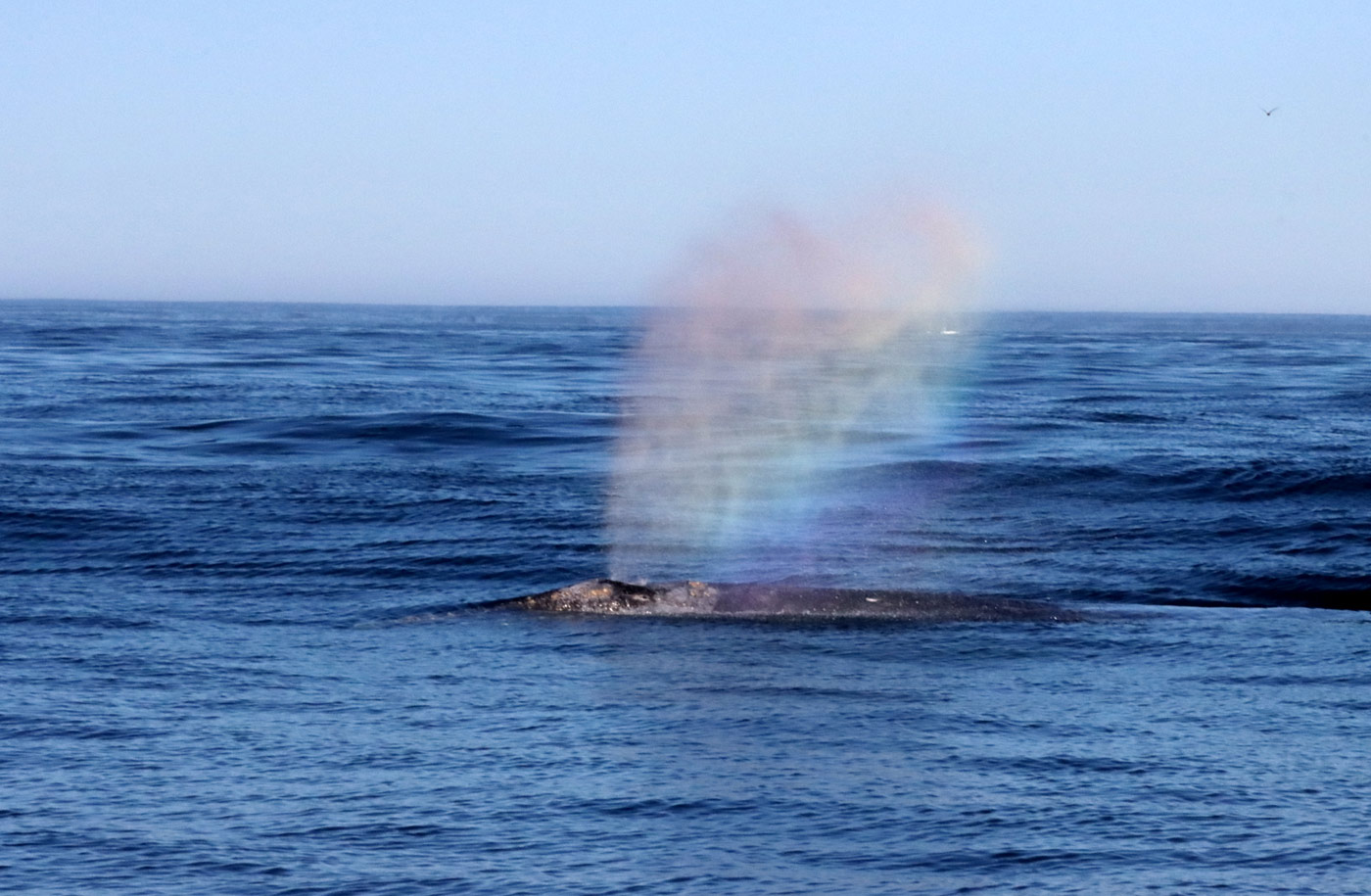
Off Newport: courtesy GEMM Lab, Marine Mammal Institute, Oregon State University
Torres and other researchers put together an amazing site about Oregon whales called IndividuWhale.com, which documents closely many of the grays along our coastline. It's an eye-popping look at their personalities and histories – like a whale tell-all. Yet it also shows the challenges the species faces in the Earth's oceans with underwater noise, boat run-ins, fishing gear, warming oceans and more.
That shot on its own is amazing, but the central Oregon coast's Jaklyn Larsen has snagged some of her own. These were photographed from Heceta Head near Florence.
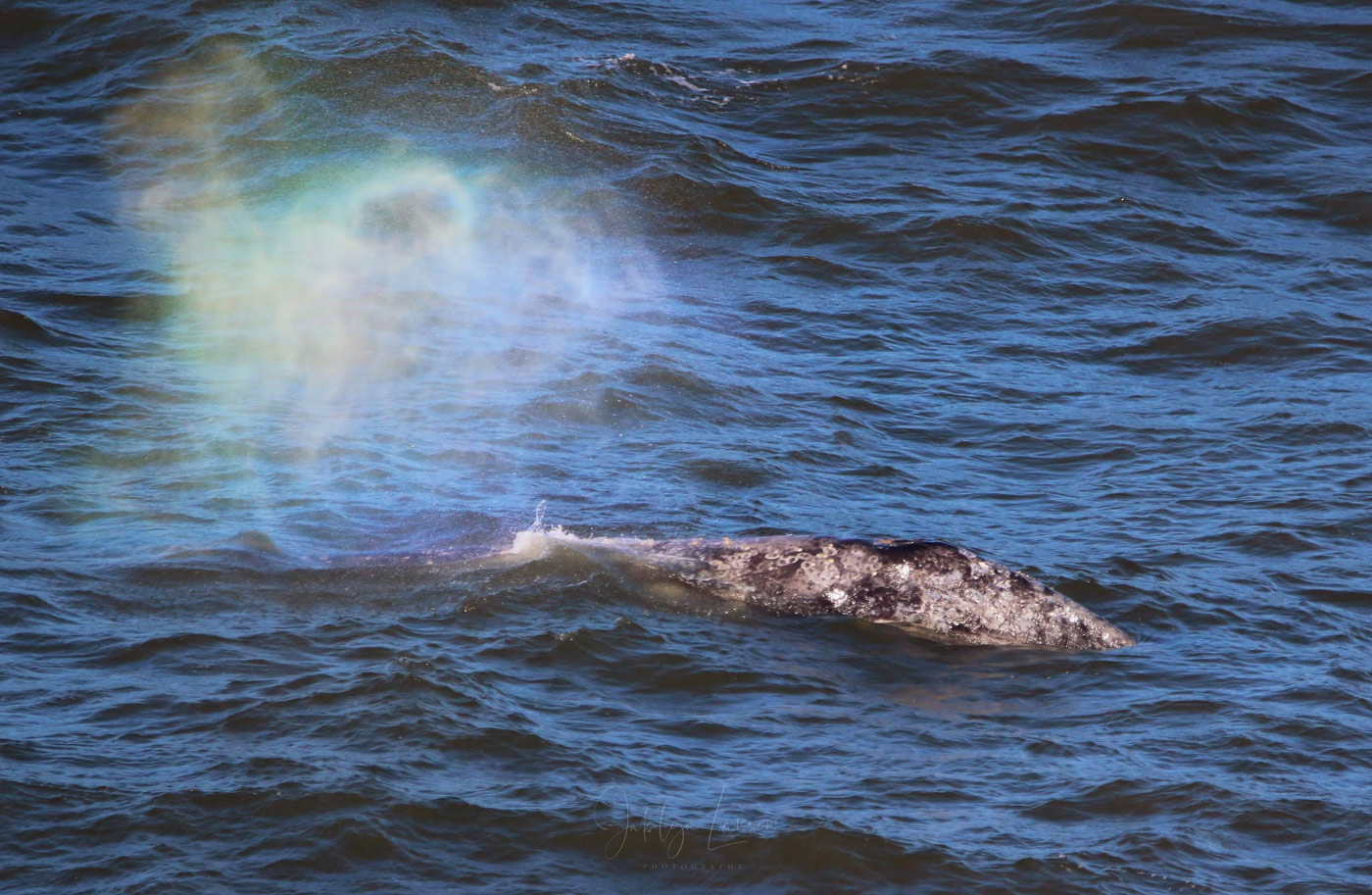
Photo Jaklyn Larsen Photograph from Heceta Head
Catching these definitely brought to mind something Harry Potter-esque.
“While I always find it exciting to see whales here on the Oregon coast, there is something magical about seeing them surface and appearing to spout rainbows in their blow,” Larsen said.
How do whale rainbow spouts happen?
First: What is a whale's spout?
Also known as a blow, it's a cloud of condensed water vapor that happens when the whale exhales, according to NOAA.
Whales only breathe every once in awhile, but when they do it's a lot of air gushing outward at once. This air is warmer than the ocean, so it's quite damp and full of droplets as it fires up. Then they fill back up, and either dive down for awhile or surface now and then to breathe again. This mechanism is more like a giant nose and mouth all at the same time, at least when it comes to breathing.
If you're really lucky, you may get to experience a gray whale spouting through its blowhole. This sometimes happens if they're really close to shore, and there's nothing quite like being within a few hundred feet of these lovely behemoths and hearing the giant hiss of air and water.
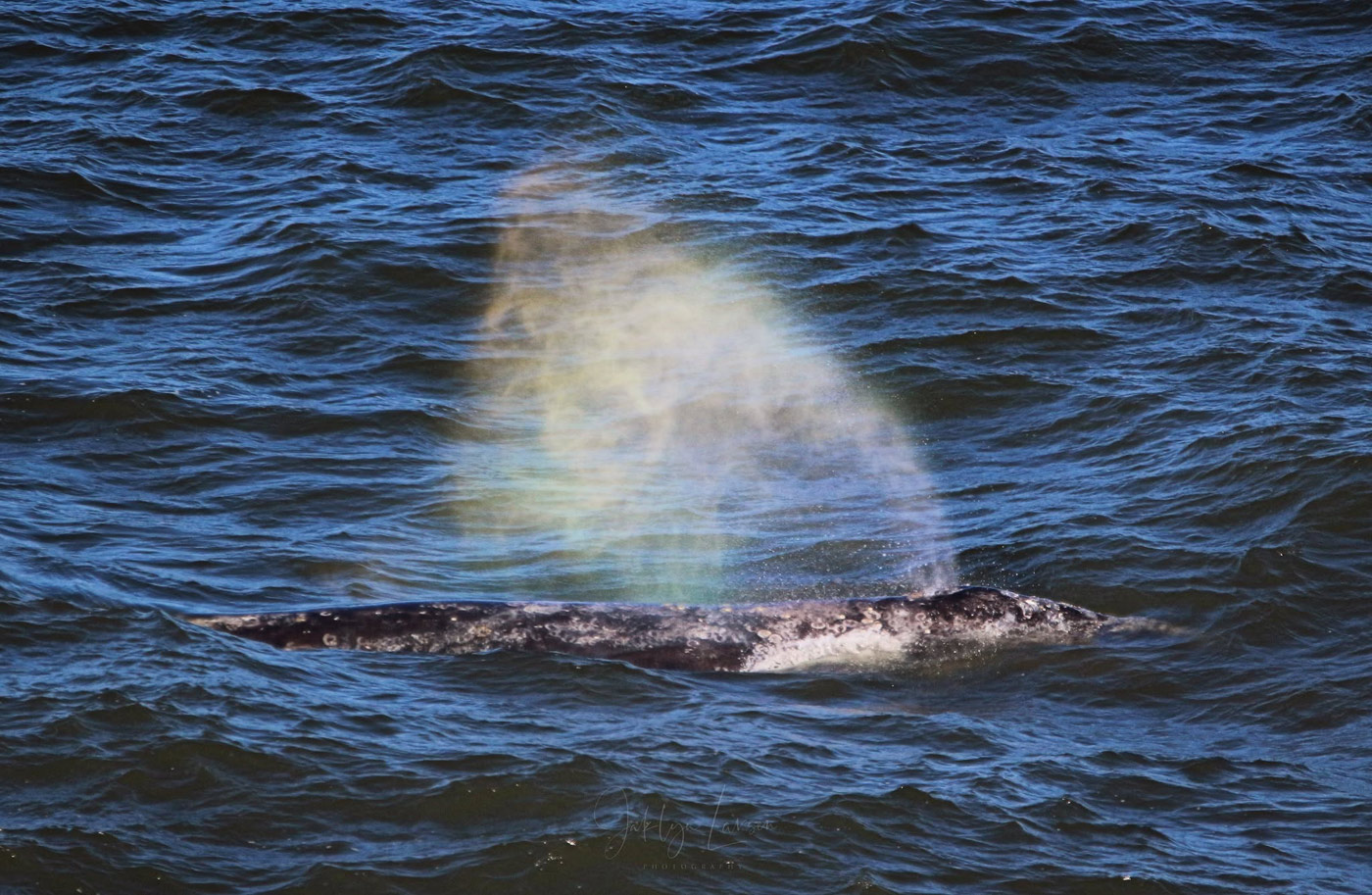
Photo Jaklyn Larsen Photograph from Heceta Head
Each species of whale has a different kind of spout. A gray whale reaches up to 15 feet high and is visible about five seconds. Grays dive for three to six minutes, then re-emerge to blow maybe three to five times. It is spectacular.
So how are rainbows formed in a whale spout?
It's pretty much the same action as regular rainbows – and it really depends where the viewer is. Someone 100 feet from you may not see the whale rainblow at all, just as rainbows change and fade in and out depending upon where you are.
According to National Weather Service (NWS), a rainbow comes together when sunlight and certain atmospheric conditions align. It's all about refracting – the bending of light – as light hits a water droplet and then is bent and slowed down. As it does so, it separates the light wavelengths and shoots them out into narrow bands of greens, reds, yellows, etc., all the colors that make up white light.
NWS said rainbows don't really exist in one place. They aren't a “thing.” They are a kind of optical effect, depending on where you are in relation to those droplets.
“A rainbow requires water droplets to be floating in the air. That’s why we see them right after it rains. The Sun must be behind you and the clouds cleared away from the Sun for the rainbow to appear,” the NWS said.
Thus, when a whale fires water up into the air as it's breathing, that runs the chance of catching light and creating a rainbow.
One thing to note: since the sun must be behind you, here on the Oregon coast or Washington coast that means it's got to be morning hours for the light to hit a whale and its spout. If you're on one of those whale watching tours along the coast, you run a better chance of having the sun behind you to the west in the later hours as you encounter of these watery beasts.
Oregon Coast Hotels for this event - South Coast Hotels - Oregon Coast Vacation Rentals - Where to eat - Maps - Virtual Tours




















OREGON COAST HOTEL REVIEWS (hit refresh to see different reviews)
Manzanita Hotel Review: Oregon Coast Inn Gets New Life as Forest Getaway, Ne...
Nehalem River Inn is nearly 100 years old. Nehalem Hotel Review
Manzanita's Ocean Inn Adds More Ways to Preserve, Give Back to Oregon Coast E...
About to become an Ocean Friendly Hotel through Surfrider. Manzanita hotel reviews, Manzanita hotel news
The Good, Rad and the Fire: Cannon Beach's Tolovana Inn Exceeds Expectations
The longtime fixture on the north Oregon coast is full of scenic surprises. Great kitchen units. Cannon Beach hotel reviews
Raucous Oregon Coast View in Lincoln City or Depoe Bay Spotlighted in May
Some of these sights cost a little less through mid May. Depoe Bay hotel reviews, Lincoln City hotel news
More About Oregon Coast hotels, lodging.....
More About Oregon Coast Restaurants, Dining.....
 |
 |
 |
Washington Coast / Oregon Coast Articles (stories are random: hit reload to see different articles)
An Oregon Coast Landmark Needs Your Help: Oceanside Tunnel Work Party20 Sep 2026 at 6:46am
Friday, October 2, help clean up the Oceanside tunnel. Oceanside events, Tillamook events, Pacific City events
Retro / Vintage Trailer Fest Again Hits Oregon Coast, Bringing Kitsch to Florence
20 Sep 2026 at 7:41pm
Dozens of restored and in-progress vintage travel trailers September 26. Florence events, Reedsport events, Yachats events
Missing Hiker Rescued from Oregon Coast Cliff - Above Lincoln City's Roads End
30 Aug 2026 at 7:25pm
A person reported missing overnight was found stranded on a cliff. Rescue. NW 26th access, NW 40th access. Weather
Beach Advisories Lifted in Three Oregon Coast Accesses: Lincoln City, Brookings, Oceanside
5 Sep 2026 at 9:30pm
Lincoln City's Siletz Bay, Mill Beach in Curry County. Oceanside. Safety
Pacific City Cave-in Incident: Oregon Coast Rescuers Warn About Digging Deep Sand Holes
10 Sep 2026 at 8:55pm
6-foot sand hole collapsed on youth: what not to do. Safety, sciences, Tierra Del Mar, McPhillips Beach
Central Oregon Coast Scares: Florence's Haunted Maze Gearing Up for More Frights
13 Sep 2026 at 8:39pm
October 28-31 at the Florence Events Center, this time with accessibility in mind. Florence events
Oregon's Hood to Coast Relay Aug. 28 - 29: Watch for Traffic Issues
26 Aug 2026 at 8:55pm
Highway 202, 101, Hwy 26 near Mt Hood and others impacted. Portland, Astoria, Gresham
Oregon Coast's Honeyman Park to Get Major Tree Removal Project, Brief Closure
19 Aug 2026 at 9:17am
A few days' closure in ?27 as 150 dead trees removed. Florence, traffic
Back to Oregon Coast
Contact Advertise on Oregon Coast Beach Connection
All Content, unless otherwise attributed, copyright © Oregon Coast Beach Connection. Unauthorized use or publication is not permitted


Oregon
Coast Hotels
S. Coast Hotels
Astoria/Warrenton Hotels
Seaside Hotels
Cannon
Beach Hotels
Nehalem Bay Lodgings
Manzanita Hotels, Lodging
Rockaway Beach Hotels
Three Capes Lodging
Pacific City Hotels, Lodging
Lincoln
City Lodging
Depoe
Bay Hotels
Newport Hotels
Waldport Lodging
Yachats
Hotels
Florence Hotels
Reedsport Hotels
Coos Bay Hotels
Bandon Hotels
Port Orford Hotels
Gold Beach Hotels
Brookings Hotels
Oregon
Coast Vacation Rentals
Oregon
Coast Lodging Specials
South Coast Hotels
Dining
Guide
Seaside
Cannon
Beach Dining
Manzanita,
Rockaway, Wheeler Dining
Pacific
City, Oceanside, Netarts, Tierra Del Mar Restaurants
Tillamook
Bay Restaurants, Dining
Lincoln
City Dining, Restaurants
Depoe
Bay Restaurants, Dining
Newport Restaurants, Dining
Waldport,
Yachats Restaurants, Dining
Florence Restaurants, Dining
Restaurant
Reviews
Coast
Events Calendar
Astoria
Seaside,
Cannon Beach Calendar
Manzanita,
Rockaway Events
Tillamook,
Pacific City Calendar
Lincoln
City Events Calendar
Newport,
Depoe Bay Events Calendar
Yachats Events Calendar
Oregon Coast Complete Guides every beach access, attraction
Search for Oregon Coast Subjects, Articles
Explore Every Beach Spot


News Headlines from All Over Oregon Need to scan Oregon headlines? Constantly updated news from all over Oregon: a comprehensive, up-to-the-minute display of news headlines from a variety of media
Oregon Coast Oceanfront Lodging, Hotels, Rentals