



Cape Kiwanda's Colossal Sand Dune: Wild Oregon Coast Rides and How It's Changing
Published 04/17/25 at 5:49 a.m.
By Oregon Coast Beach Connection Staff
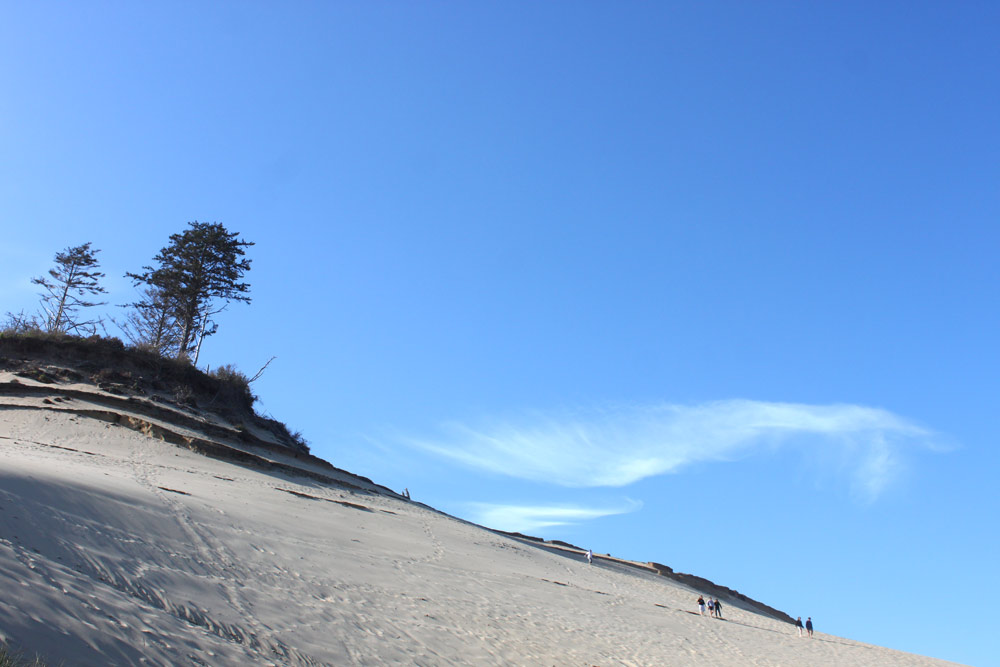
(Pacific City, Oregon) – Like a mix of Mad Max and a sports enthusiast's dream, one structure looms high over Pacific City. Really high. Dare to climb it and you'll slowly, achingly trudge up a couple hundred feet to the top of this sandy colossus, where ragged, wind-sheared coastal trees stand bare and look a bit post-apocalyptic.
Includes exclusive listings; some specials in winter
In Cannon Beach:
Includes rentals not listed anywhere else
In Manzanita, Wheeler, Rockaway Beach:
Some specials for winter
In Pacific City, Oceanside:
Some specials for winter
In Lincoln City:
Some specials for winter
In Depoe Bay, Gleneden Beach:
Some specials for winter
In Newport:
Look for some specials
In Waldport
Some specials for winter
In Yachats, Florence
Some specials for winter
Southern Oregon Coast Hotels / Lodgings
Reedsport to Brookings, places to stay; winter deals
Towering over Cape Kiwanda is perhaps the tallest structure to extend upward from any Oregon coast beach. The headland’s dune was measured by DOGAMI / State of Oregon geologists in 2009 and lidar records show it topping at 228 feet high (and with the canopy it can extend to 255 feet high). If you want to get real nerdy about it, much of Cape Kiwanda's ledges clock in around 44 feet off the sand.
Indeed, the Mad Max vibe may not be entirely far off: the lofty spot and the cape are falling apart at an ever-increasing rate. The science of this place - the southernmost cape along Oregon's Three Cape's Loop – is intriguing. See Cape Kiwanda, Oregon Coast: Complete Travel Guide, Hiking, Recreation, Safety, History
Kiwanda Tide Pools, Structures To Previous Tour Spot
To Next Tour Spot Top of Cape Kiwanda
From the top of Cape Kiwanda's dune, there's a special kind of recreational madness that takes hold here. It's a kick to watch.

There's plenty up here who simply stand in awe and reverence at the ocean vista. Yet there's likely just as many who engage in some sort of sand-sliding behavior. This can either be the simple act of sliding down on your butt to even rolling yourself down this gargantuan hill – though that probably can't be recommended. Some grab boards of various types and actually go “sandboarding” down that hill.
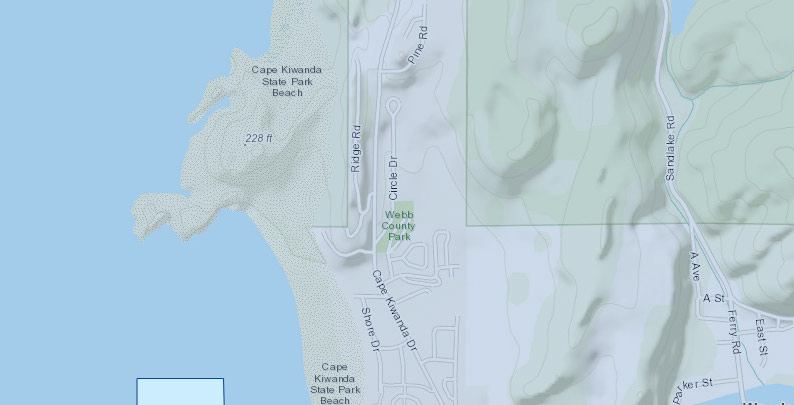
Lidar courtesy DOGAMI, showing top of Cape Kiwanda at 228 feet
That's what can be such a hoot to check out: many times it's something kind of makeshift they're zooming down on.
Who could resist that rocketing down that steep slope, anyway? It's the grind up those 228 feet that's leg cramp-inducing just thinking about.
The other big surprises of the Oregon coast landmark lie in its science and why the icon is crumbling.

First, all that sand comes from wind blowing it up here.
Back in 2023, a major sinkhole developed on the north end of Cape Kiwanda, and it quickly kept growing until more than one chasm developed. At that time, state geologists Laura Gabe and Jonathan Allan investigated and soon released a rather remarkable paper on it. Sinkhole Dangers Grow
One of the first surprises you learn from that paper is for some two million years sand has been collecting on the cape and surrounding north coast, and Kiwanda used to be much larger. There was actually a time when it and Haystack Rock offshore were connected.
It seems some of the oldest sands are piled up here, according to Allan and Gabe.
The cape itself was formed over millions of years starting roughly 15 million years ago. Geology of an Oregon Coast Icon: Sweeping Cape Kiwanda
Chunks of Kiwanda have been falling off for decades, actually, caused by erosional waves and parts of it being undercut. Yet the rate is increasing a little, and even the dune may be going bye-bye.
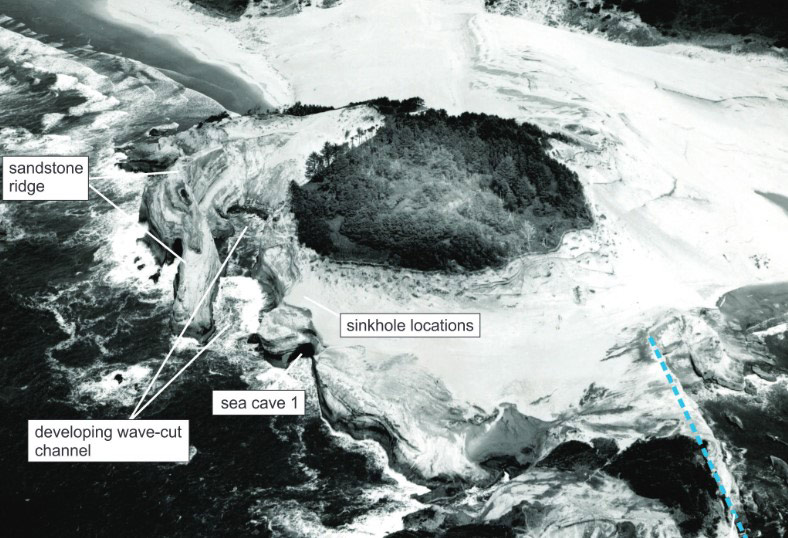
Photo Kinney / Oregon Highway Division
Gabel and Alan pointed to a 1974 photo taken by Kinney/Oregon Highway Division which shows the tuft of vegetation in a thick, circular pattern at the top.
Fast forward:
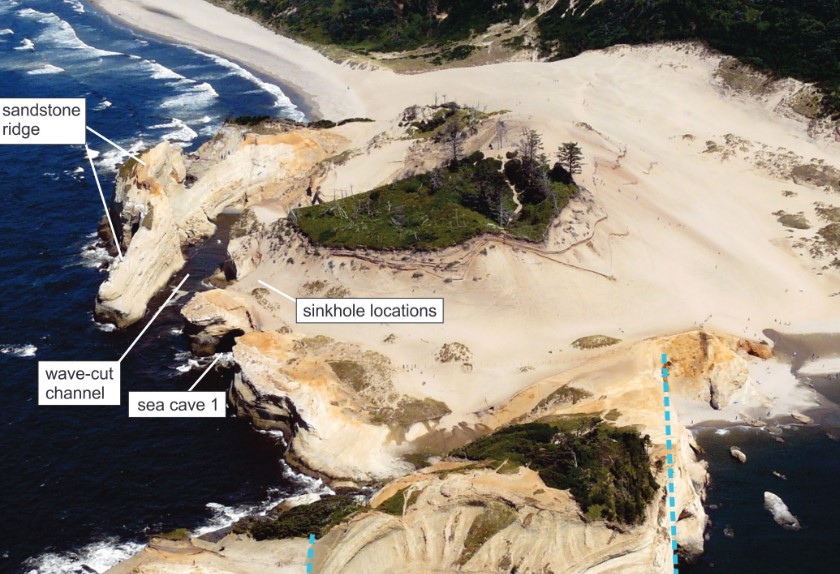
Gabel's photo in 2011
“Since 1939, vegetation around central Cape Kiwanda decreased by ~66% from 4.6 to 1.6 hectares (11.5 to 3.9 acres),” Gabel and Alan wrote. “Conversely, vegetation at the far western end of Cape Kiwanda does not appear to have changed significantly over time.”
Hotels in Three Capes - Where to eat - Three Capes Maps and Virtual Tours
Hotels in Pacific City - Where to eat - Pacific City Maps and Virtual Tours

















Oregon Coast Vacation Rentals
Oregon Coast Lodging Specials


More About Oregon Coast hotels, lodging.....
More About Oregon Coast Restaurants, Dining.....


LATEST Related Oregon Coast Articles
Obvious and the Hidden at Cape Kiwanda: Deep Inside the Oregon Coast LandmarkWhat you don't know about the Pacific City icon may thrill you. Travel tips, kids
Cape Kiwanda Almost Had Nuclear Power Plant: Bizarre Oregon Coast State Park ...
The park got its start after a nuke was proposed on the cape
Oregon Coast's 'Master of the Dune' Shows Cutting-Edge Sandboard Art in Florence
Through Feb Lon Beale, founder of Sand Master Park shows wild art. Florence events
ATV Crash at Oregon Coast Dunes Event Results in DUI
51-year-old man was arrested for DUI
Oregon Coast This Weekend: Wildfire, Oil Spill, DUII on the Dunes, Fatal Crash
1 Jun 2026 at 10:05pm
Incidents in Astoria, Winchester Bay, Dune City, Cloverdale, Tillamook. Traffic, crime, US Coast Guard
Two Videos Show Different Angles on Near-Deadly Oregon Coast Wave
The incident from 2021 just surfaced, showing a wave knocking people around Cape Kiwanda. Weather. Safety
Cape Kiwanda's Colossal Sand Dune: Wild Oregon Coast Rides and How It's Changing
A mix of crazy recreation with science of a crumbling landmark. Sciences, Pacific City, Oceanside
Pacific City: N. Oregon Coast Rescuers Use Drone to Assist Surfer at Cape Kiw...
Both surfers ended up safe on land. Beach safety
Back to Oregon Coast
Contact Advertise on Oregon Coast Beach Connection
All Content, unless otherwise attributed, copyright © Oregon Coast Beach Connection. Unauthorized use or publication is not permitted


Oregon
Coast Hotels
S. Coast Hotels
Astoria/Warrenton Hotels
Seaside Hotels
Cannon
Beach Hotels
Nehalem Bay Lodgings
Manzanita Hotels, Lodging
Rockaway Beach Hotels
Three Capes Lodging
Pacific City Hotels, Lodging
Lincoln
City Lodging
Depoe
Bay Hotels
Newport Hotels
Waldport Lodging
Yachats
Hotels
Florence Hotels
Reedsport Hotels
Coos Bay Hotels
Bandon Hotels
Port Orford Hotels
Gold Beach Hotels
Brookings Hotels
Oregon
Coast Vacation Rentals
Oregon
Coast Lodging Specials
South Coast Hotels
Dining
Guide
Seaside
Cannon
Beach Dining
Manzanita,
Rockaway, Wheeler Dining
Pacific
City, Oceanside, Netarts, Tierra Del Mar Restaurants
Tillamook
Bay Restaurants, Dining
Lincoln
City Dining, Restaurants
Depoe
Bay Restaurants, Dining
Newport Restaurants, Dining
Waldport,
Yachats Restaurants, Dining
Florence Restaurants, Dining
Restaurant
Reviews
Coast
Events Calendar
Astoria
Seaside,
Cannon Beach Calendar
Manzanita,
Rockaway Events
Tillamook,
Pacific City Calendar
Lincoln
City Events Calendar
Newport,
Depoe Bay Events Calendar
Yachats Events Calendar
Oregon Coast Complete Guides every beach access, attraction
Search for Oregon Coast Subjects, Articles
Explore Every Beach Spot


News Headlines from All Over Oregon Need to scan Oregon headlines? Constantly updated news from all over Oregon: a comprehensive, up-to-the-minute display of news headlines from a variety of media
Oregon Coast Oceanfront Lodging, Hotels, Rentals