 |
 |









Fire Beneath the Oregon Coast: The Science of Underwater Volcanoes
Published 2006
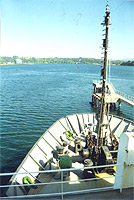 |
| Research vessel from New York University docked at the Hatfield in 1998 |
(Newport, Oregon) - The Oregon coast isn't always a peaceful place, as a series of undersea earthquakes in recent years illustrated, everything from the tsunami warning of June, 2005 to those that rattle off the north and central Oregon coasts periodically – sometimes getting publicized widely and sometimes not. There's a heck of a lot more brewing down there than people realize, with a whole host of cracks and vents spewing lava from the ocean floor just off our coast.
This is why the Vents Program at Newport's Hatfield Marine Science Center exists. Some 20 or so scientists work on the program there, studying and measuring these intricate events. It recently acquired a jolt of interesting publicity when one expedition spotted an enormous plume of underwater volcanic activity and caught it on film – one of the rarest sights in this field of research.
Hatfield's public marine educator, Bill Hanshumaker, says the program focuses on a variety of things related to undersea volcanic and tectonic activity. Tsunamis, volcanoes, mapping of the ocean floor, studies of other geologic features and the strange life forms there that thrive only in the intense heat of water hotter than 100 degrees Celsius are all under their microscope, so to speak.
At one time, scientists at Vents were also interested in the now-submerged coastline that was once above water some 14,000 years ago, looking for signs that people lived along these shores at that time.
These scientists-in-residence - some from OSU, some from the National Oceanic and Atmospheric Administration and other institutions - pile onto various research vessels over the course of the year, primarily in the summer. They hit the seas for two or three weeks at a time. "The cruises are a mix of scientists, including biologists," said Hanshumaker.
 Approximately 300 miles off Oregon's shores, to the northwest, lays the Axial Mount, an undersea volcano that's about a mile high, although its tip is still a mile below the ocean surface. Much closer to our shores is where two plates meet - one holding the U.S. and the other is the Juan De Fuca Plate beneath the Pacific. This area is then called the Cascadia Subduction Zone, and it’s the likely source of any nasty tsunamis that will eventually come our way someday.
These are (literally) hotspots for many Hatfield scientists, who regularly venture out there to place measuring equipment. "They deploy these instruments, then leave them for a whole year," said Hanshumaker. These instruments record data about movement, seismic activity, temperatures, etc.
Hanshumaker said the instruments are covered with markers and anchored down by a very low-tech railroad wheel. Some carry a giant tube filled with batteries so they can last a year. When it comes time to retrieve them, an acoustic signal is sent to drop the wheel and they float to the surface, with the markers allowing them to be spotted by scientists.
That doesn't always work like clockwork, Hanshumaker said. Once, an instrument got stuck in a lava flow during the course of its year's tenure beneath the waves. So a robotic sub had to aid in retrieve it.
Enter serendipity. That incident has helped create a fascinating and fun Vents exhibit in the public sector of the Hatfield - a sort of video game. Visitors can grab a joystick and take a robot to the deep on a choice of three missions. One of those is to retrieve the lava-jammed instrument. "It's a simulator called 'Dive & Explore," Hanshumaker said.
That mission contains actual video footage from the retrieval mission, augmented by computer animation that allows the visitor to move the robot around and do different things.”
Currently, one of the highlights at the Hatfield features the wild and amazing geologic discoveries made recently by staff in the world of underwater volcanoes. Footage from one of these expeditions spread around the news like wildfire earlier this year, with video of a spectacular underwater eruption featuring the shrieks of glee of scientists in the background.
No one had ever videotaped such a large event before. It was a landmark moment – and the Hatfield’s staff was part of it.
You can view all this at OceanQuest Cruises, a special multi-media talk and presentation given by Hanshumaker every day until Labor Day, starting at 1:30 p.m. These brain-tingling talks cover the recent cruises to what is called the “ring of fire” – three scientific expeditions to underwater volcanoes. Hanshumaker was on two of these to Antarctica. The third expedition, to the Mariana Islands, includes the recent stunning find that made it all around the world media. See astounding, rare deep-sea life as well.
Hatfield Marine Science Center. 2030 S. Marine Science Drive, Newport. (541) 867-0100. hmsc.oregonstate.edu/visitor or http://hmsc.oregonstate.edu/.
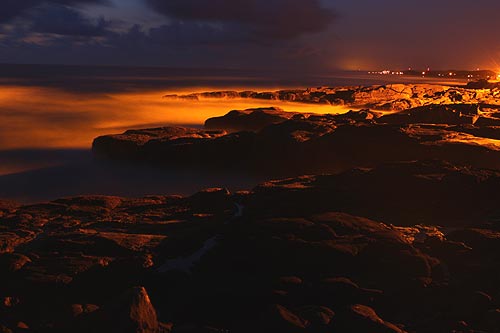
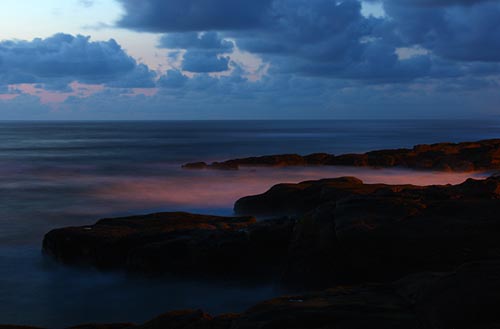
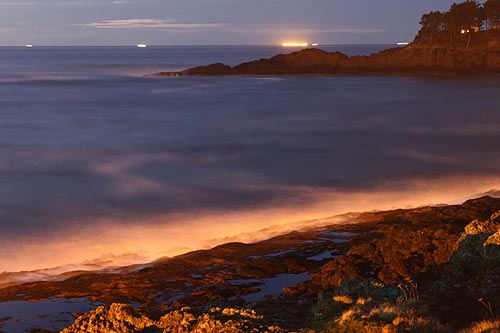
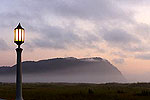
Below: parts of the Oregon coast at night look a little like the undersea volcanoes.
More About Oregon Coast hotels, lodging.....
More About Oregon Coast Restaurants, Dining.....
 |
 |

 |
 |
 |
 |
 |
 |
Back to Oregon Coast
Contact Advertise on BeachConnection.net
All Content, unless otherwise attributed, copyright BeachConnection.net Unauthorized use or publication is not permitted


Secrets of the Season |

Unusual Travel Articles TravelParanormal.com allows you to submit your own creepy tale or debunk one - or see up-to-the-minute news headlines about travel and the paranormal. News Headlines from All Over Oregon Need to scan Oregon headlines? Constantly updated news from all over Oregon: a comprehensive, up-to-the-minute display of news headlines from a variety of media |