



Official Oregon Coast / Washington Coast Lewis and Clark Guide - Corps of Discovery, Sacegawea
Updated 12/24/2012
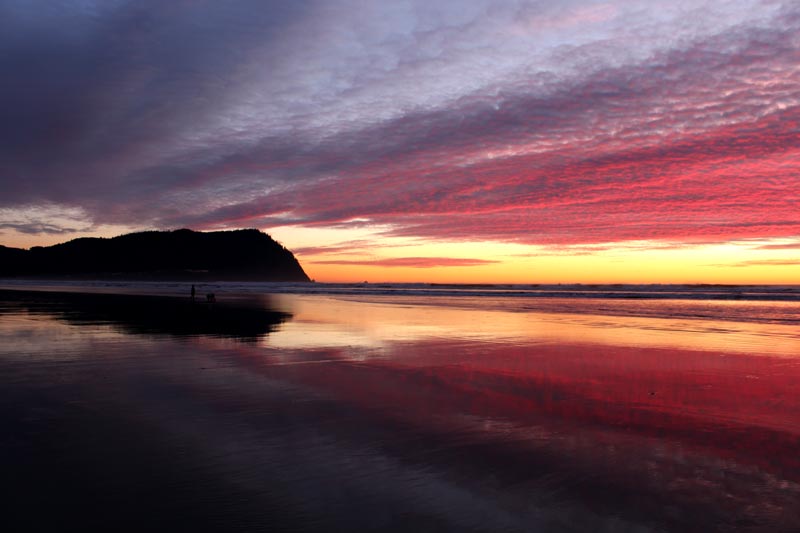
Seaside and Tillamook Head
SAUVIE ISLAND. Just north of Portland's grand St. John's Bridge, along Highway 30, you'll find this enormous park. The Corps of Discovery explored this island a little as they came down the Columbia. It now holds the distinction of being the only L&C site that has a nude beach.
COLUMBIA COUNTY HISTORICAL SOCIETY MUSEUM. Learn about the Corps' campsite and activities along the Columbia. 511 E Bridge Street, Vernonia. 503-429-3713.
PRESCOTT BEACH COUNTY PARK. The Corps spent the night near here on Nov. 5, 1805, just upstream from present-day Rainier - and about a mile from St. Helens. Their campsite of November 6, 1805, was near Cape Horn in Wahkiakum County, Washington.
JULIA BULTER HANSEN NATIONAL WILDLIFE REFUGE. On the Washington side, Lewis & Clark notated scientific descriptions of various wildlife here. On Highway 4, in Cathlamet, Washington.
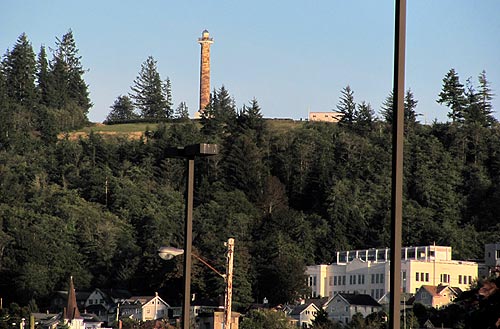
ASTORIA AND ASTORIA COLUMN. There are no actual Lewis & Clark sites in this charming and ultra-atmospheric town, but it's full of numerous other time-traveling opportunities. The Astoria Column has a mural that talks about the Corps' time here, and the hill it resides on is also the birthplace of cable TV. There are several historical museums that delve into Lewis & Clark history and loads of Victorian mansions. www.oldoregon.com.
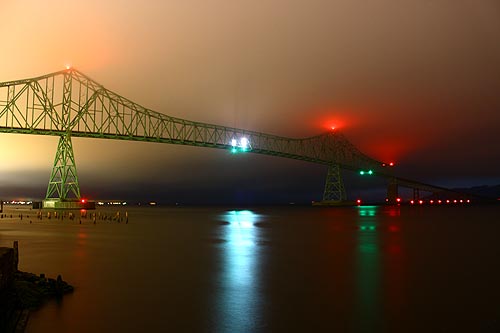
MEGLER REST AREA. The Corps was trapped here by a winter storm for five miserable days in late November of 1805, nicknamed Clark's Dismal Nitch. Highway 401, Washington Coast.
STATION CAMP. This park, near Chinook, Washington, was where they settled down to camp and spotted the ocean for the first time - or so they thought - with Clark writing "Ocian in view! O! the joy" on November 7. In fact, what they were seeing was the limitless horizon, unbounded by any more bends in the river. The ocean was still 20 miles away. This was also where the famous vote was taken later in November - the first to include votes by a woman and a black man.
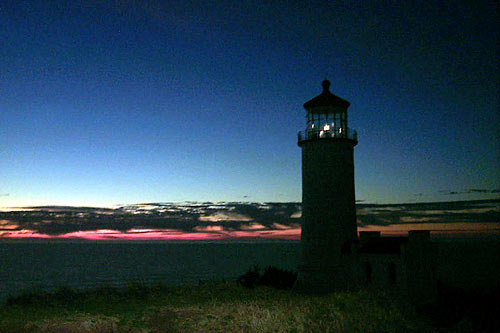
FORT COLUMBIA STATE PARK and CAPE DISAPPOINTMENT. Lewis was the first to romp around this headland, hoping to catch sight of the ocean. Later, on November 18, Clark and a handful of men come here and actually spotted the ocean for the first time. Clark carves his name next to Lewis' on a tree (although that was never found). Highway 101, Chinook, Washington.
ILWACO HERITAGE MUSEUM. An interpretive center with loads of L&C information. Ilwaco, Washington.
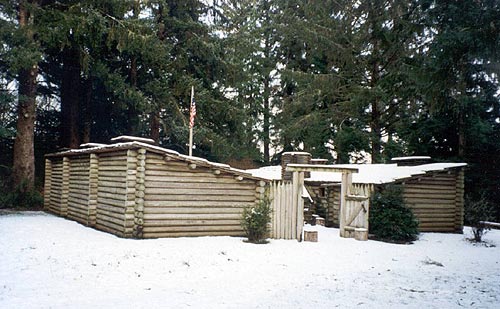
FORT CLATSOP NATIONAL MEMORIAL. Just south of Astoria, this is where the Corps established winter camp from December 1805 to March 1806. The replica of the fort burned down in the mid-2000s, but has since been rebuilt. The visitor center is still growing and providing a wealth of information - not to mention the living history programs during the summer. Of the 112 days they stayed here, only 12 were without rain. Off Highway 101, east of Warrenton.
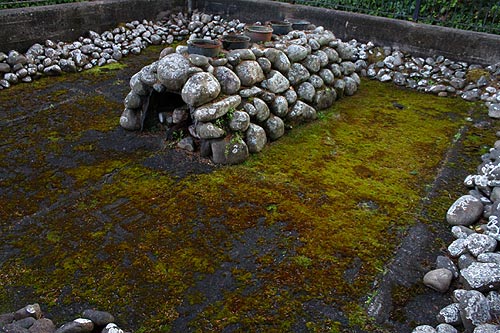
SEASIDE SALT WORKS. From January to February 1806, one group from the Corps went to the beaches of Seaside and boiled sea water for salt. The site is considered to be the exact spot by historians. Look for Lewis & Clark Way to find the replica of the boiling structure. Seaside. Take the Virtual Tour of Seaside, Oregon.
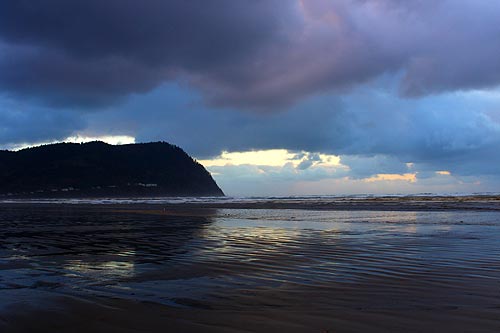
TILLAMOOK HEAD. Clark and a party of 13 meandered over the headland to check out a beached whale in Cannon Beach. Clark gushed over one viewpoint here in his journals, blessed with clear, sunny weather. There is a monument to him along this six-mile trail to Cannon Beach. Take the Virtual Tour of Seaside, Oregon. There's also an old WWII radar station, albeit just the remnants.
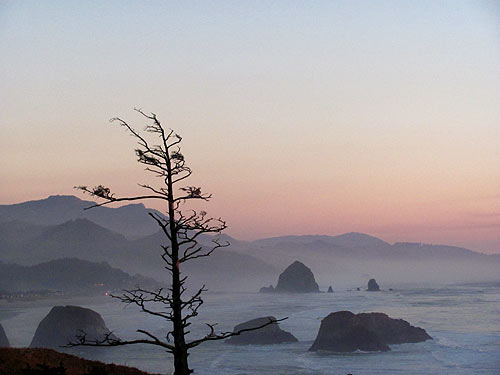
ECOLA STATE PARK. Wander the same trail as Clark, his men and Sacagawea on their way to the creek and the beached whale. Incredible views are to be had here. Cannon Beach. Take the Virtual Tour of Cannon Beach.
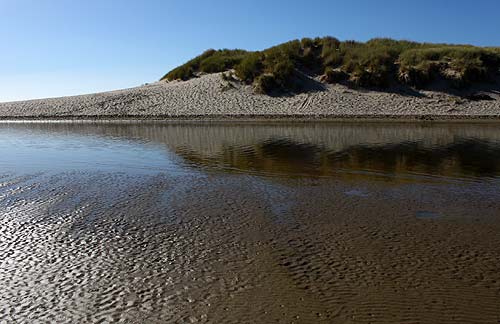
LES SHIRLEY PARK. At the northern end of Cannon Beach, just north of downtown and the bridge, you'll find this park commemorating the spot with the beached whale - which was on the north side of Ecola Creek. It's considered to be the southernmost point the Corps traveled. Take the Virtual Tour of Cannon Beach.
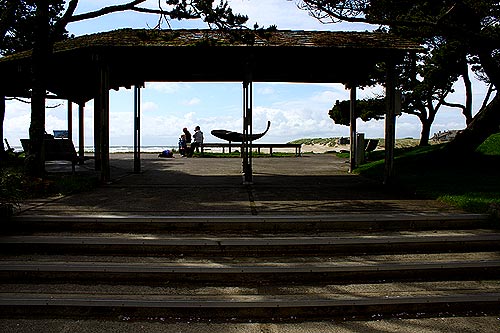
WHALE PARK. A gazebo-like structure at the entrance to downtown Cannon Beach, close to the beach, features a whale sculpture, commemorating the whale on the other side of the creek. Take the Virtual Tour of Cannon Beach.
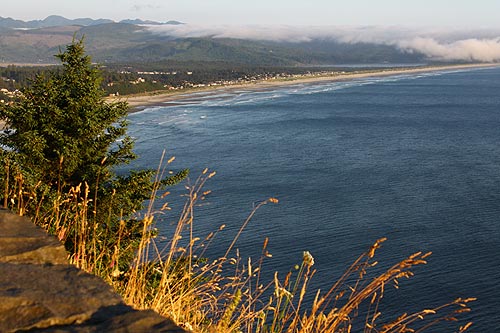
NEHALEM BAY. Or did the Corps of Discovery stop at Cannon Beach? There is a rogue (yet almost convincing) theory Clark and the 13 came to 45 miles south of Fort Clatsop and not 25 miles, which would've brought them to the mouth of the Nehalem Bay. Come explore this stunning area and check out the insistence of the locals that this area was the Corps' last stop. This is only one theory, and the vast majority of historians do not buy into it. Still, even if you don't believe - it's a stunning place to light the fires of imagination. Take the Virtual Tour of Nehalem Bay, Manzanita.
More About Oregon Coast hotels, lodging.....
More About Oregon Coast Restaurants, Dining.....


Oregon
Coast Lodging
Seaside
Cannon
Beach Lodging
Manzanita,
Rockaway, Wheeler Lodging
Three Capes Lodging
Pacific City Lodging, Hotels
Lincoln
City Lodging
Depoe
Bay Lodging
Newport Lodging
Waldport Lodging
Yachats
Lodging
Oregon
Coast Vacation Rentals
Oregon
Coast Lodging Specials
Dining
Guide
Seaside
Cannon
Beach Dining
Manzanita,
Rockaway, Wheeler Dining
Pacific
City, Oceanside, Netarts, Tierra Del Mar Restaurants
Tillamook
Bay Restaurants, Dining
Lincoln
City Dining, Restaurants
Depoe
Bay Restaurants, Dining
Newport Restaurants, Dining
Waldport,
Yachats Restaurants, Dining
Florence Restaurants, Dining
Restaurant
Reviews
Coast
Events Calendar
Astoria
Seaside,
Cannon Beach Calendar
Manzanita,
Rockaway Events
Tillamook,
Pacific City Calendar
Lincoln
City Events Calendar
Newport,
Depoe Bay Events Calendar
Yachats Events Calendar
Oregon Coast Complete Guides every beach access, attraction
Search for Oregon Coast Subjects, Articles
Explore Every Beach Spot
News Headlines from All Over Oregon Need to scan Oregon headlines? Constantly updated news from all over Oregon: a comprehensive, up-to-the-minute display of news headlines from a variety of media
Oregon Coast Oceanfront Lodging, Hotels, Rentals










Back to Oregon Coast
Contact Advertise on BeachConnection.net
All Content, unless otherwise attributed, copyright BeachConnection.net Unauthorized use or publication is not permitted